Showing posts with label Books 2017. Show all posts

Sunday, December 31, 2017

Books Read in 2017

For the past few years (2016, 2015, 2014, 2013, 2012, 2011, 2010, 2009) I've had a goal to read and review a bunch of books over the course of each year.


My goal had been to average a book per week and end up with 50 books read and reviewed at the end of the year. I usually don't include smaller books (early middle grade, picture books, etc) unless I feel really strongly about them. For the past couple of years I've dropped well below my 50 and only ended up reviewing 9 books last year (though I did read more than that). I don't know if I'll get back to the ~50 range, but we'll see what I can do. Wish me luck.


  1. Ready Player One
  2. A Wrinkle In Time
  3. King Solomon's Mines
  4. Peter Pan (re-read)
  5. The Ultimatum
  6. Herland
  7. The Man in the High Castle
  8. The Metamorphosis
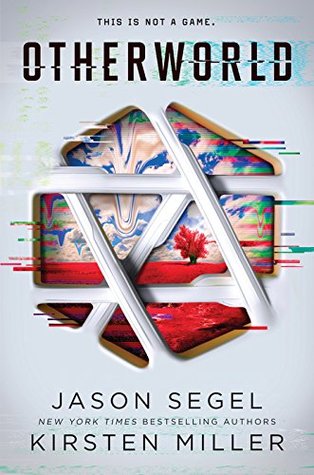
  9. Otherworld
  10. The Thing Beneath The Bed
  11. A Wise Man's Fear
  12. Red Planet
  13. The Dark of Deep Below
  14. The Woman in White

Friday, December 29, 2017

Book Review - The Woman in White

NOTE: As an apology I want to clarify that the length, style and tone of this review was initially meant to illustrate some of the impressions of the style, tone, etc of Victorian literature as perceived during my reading of The Woman in White. I fear that my attempt at flattery via mimicry has failed in great regard. As such I beg your pardon and hope that you will find the following words somewhat worthwhile. Perhaps at some future date I may try to amend this review into something more satisfactory. Until then, I present this narrative to you in its unadulterated state for your perusal.

Even though I graduated with a degree in English, I had never read anything by Wilkie Collins either as part of curriculum or through my pleasure reading. I had heard his name from time to time and knew generally of (his arguably) most well-known work The Moonstone, largely because of its fame as being the first English detective novel. I had also heard of The Woman in White but new nothing more than its name. As far as his other works, I was completely ignorant.

I suspect his oversight in the English curriculum is due largely to the eclipse caused by Charles Dickens and the Bronte sisters who dominate the studies of the Victorian period. Indeed, Collins himself was a fan of his contemporary author friend Dickens and it seems the two even worked together from time to time.

Those familiar with the Victorian period won't be surprised by the length of The Woman in White nor by the denseness of the writing. I remember stories about the authors of the 1800s intentionally stretching out their vocabularies to earn more money due to being paid by the word or by the page in their serialized stories. While there is some truth to that, it should also be remembered that the companies publishing the stories also wanted to make money so they weren't just going to push out 500 pages of verbose drivel without making sure it was coherent, engaging and marketable. As a reader, especially in the 21st century with our short attention span and our desire for quick flashy bite-sized reads, it's easy to get bogged down in lengthy scenes with intricate details and descriptions along with thoughtful, methodical and often minute actions and progress.

All discussion aside about my delay in becoming acquainted with Collins and in the nature of Victorian literature, I transition now to impressions about this novel in particular. As I began my reading, I had no clear expectations for the plot or characters in this book other than knowledge of the title character. I speculated that perhaps there may be gothic elements and that the Woman may turn out to be a ghostly apparition or otherwise influenced by supernatural means. That theory was quickly destroyed but was replaced by a concept that still left more questions unanswered. We walk the streets of London with Walter Hartright late one night and encounter the titular Woman in White. In his own words, seeing her brought his blood "to a stop." He was entranced, not necessarily by her beauty but by her mysterious and strange appearance. He briefly accompanies her and provides words of friendship and compassion while trying to unravel the mystery of her appearance and person. When she hurries on her way he is left wondering about her. Moments later he is more confused when confronted by men pursuing her as an escapee from an asylum. For reasons unknown, he guards her secret and lets the men continue on ignorant of her location but Walter is left contemplating ore on the Woman in White.

Saturday, December 16, 2017

Book Review - The Adventures of The Princess and Mr. Whiffle - Books One and Two

This post contains mini-reviews of two picture books written by Pat Rothfuss illustrated by Nate Taylor. They are in a series called "The Adventures of The Princess and Mr. Whiffle" and each book contains a disclaimer that these are NOT books for children and that the reader should consider him/her self warned.


Wednesday, November 01, 2017

Book Review - Red Planet

I still haven't read much by Heinlein and consistently hearing that he's the "master" or "father" of science fiction, I keep feeling like I need to seek him out more often. I happened to find a copy of Red Planet at our local used book store so I decided to give it a try.

The edition I read included an introduction that informed me that this was one of Heinlein's "juvenile" novels or "boy books." The introduction also included a description of the "censorship" that happened by way of severe editing of this book in its initial release (as well as commentary on the heavy editing of Heinlein's other books). The intro made it clear that the edition I was reading had been restored to Heinlein's original edition, reverting the edits that Heinlein had objected to. The intro alluded to a couple of the edits (such as removing/minimizing references to weapon use by the boys and information as to the biological nature of Willis, the Martian "pet" of our protagonist). It's interesting to think of these types of content as potentially controversial or threatening to readers of the 1940s and 1950s. I suppose part of the reaction was due to this being aimed at child readers but my 21st century sensibilities found no objection to the content called out by the intro. Still, I'm not sure what else may have been trimmed or modified so I can't wholly condemn either the editor or the author.

The story is a fairly simple one but with a couple of interesting twists to keep the adventure intriguing and to help propel the plot. The book takes place on Mars in the distant future. Mankind has begun colonizing Mars and is currently just a couple of generations into the process. They have numerous colonies on the planet and have a system of migration from north-to-south and back in order to try and stay in the more "temperate" zones of the Martian seasons. Colonists live under the rule of a combination of government and corporate oversight while also reporting to absentee leaders back on Earth.

Monday, October 30, 2017

Book Review - The Wise Man's Fear

Even though I was late to the party when I finally read The Name of the Wind, I was a little relieved to know that I wouldn't have to wait 4 years to read the second book in the series. Instead, I was able to immediately pick up a copy of The Wise Man's Fear and add it to my "to read" list (sliding it past a couple of other books already in line).

The first novel really drew me in with wonderful imagery, beautiful writing and a fabulously immersive and intriguing story. The second novel takes each of those things I already loved and refines them even more. I grew more and more impressed by Rothfuss' writing style and loved the story with every page I turned. Knowing that the third (and final?) book in the series has not yet been released, I intentionally slowed down my reading a bit to stretch out the enjoyment.

This second novel picks up where the first ended. It gives a slight interlude to reacquaint the reader with the world and the characters before diving headlong into the story. In spite of this brief settling in period, I wouldn't recommend a new reader skip straight to book two...there's too much world and character building in the first book to gloss over.

Like the first book, we are hearing the story of Kvothe as he narrates his life to a man (the Chronicler) who will write his biography. There are brief breaks that bring us back to the "present time" for Kvothe and the others to grab a bite to eat or deal with issues in the current time. I felt like these 'intermissions' had a little more meat to them in this book. Partly they expanded the potential for a new plot/story to unfold after we finally finish hearing Kvothe's biography to this point.

In the history told in Wise Man's Fear we learn about two major periods of Kvothe's life.

Wednesday, October 11, 2017

Book Review - Otherworld

Upon reading the book summary for Otherworld, I expected this novel to be somewhere in between Ready Player One by Ernest Cline and The Mortality Doctrine series by James Dashner. There were plenty of similarities in the sense that the books involve the characters getting dangerously lost in a Virtual Reality game that’s more than it seems. It’s probably a bit closer related to the Dashner series than Ready Player One but it’s different enough to stay fresh and keep me interested.

Otherworld is a virtual reality game that’s expansive and hyper-realistic. At the opening of the book, current technology includes visors, gloves and VR haptic gear…pretty standard concept. The game is in a very exclusive early release phase with gear and access costing hundreds or thousands of dollars. This high entry point and seemingly limited release did have me a little confused later in the book as our characters encounter a ton of other player characters, but I guess there are plenty of hard core gamers who will shell out high costs for something like this.

The book focuses on the main character of Simon. He’s the high school son of ultra-rich parents who are mostly uninvolved with his life except as it comes to scolding him for misbehaving. Through his childhood and early he made a secret friendship with a girl named Kat. Due to the interference of their parents and trouble that got Simon kicked out of multiple schools, Kat is no longer associating with Simon at all and her stepfather has threatened legal action if he finds Simon around. Naturally this doesn’t stop a headstrong teenage boy and he keeps trying to figure out why Kat is being so standoffish towards him.

After a few days there’s a major accident that leaves numerous students dead and others, including Kat, in a coma. Specialists arrive from the Company that created Otherworld and they invite the comatose Kat to participate in a special beta of a Disk. The disk takes comatose patients into a virtual world where they can have a form of life while waiting for their body to heal in the real world. Simon naturally suspects a conspiracy and worries that Kat is in danger. Developing some new alliances, Simon decides to go into the virtual world to save her.

Saturday, September 02, 2017

Book Review - The Metamorphosis

Having just finished reading The Metamorphosis, I feel like this is the kind of book that is probably best appreciated by reading a companion essay of some sort or at least studying some of the history of Kafka and his life and times.

For those who aren't familiar with the novella, this book is the story of Gregor, a young traveling salesman (who lives at home with his parents and sister) that wakes up one morning with the strange realization that he has transformed into a large beetle/cockroach insect. The book explores his personal realization of the change as well as the reactions of his family members and the events that follow.

In the early 20th century, this sort of story was probably shocking in its own way and more so than it is in the 21st century. However, as with a lot of "classics" in Literature, the meat of the book is not skin deep but rather lies in the theme and underlying messages that can come from critical analysis and insight.

Without knowing much about the social and political leanings of Kafka, I can't ponder officially on what he might be saying about the lower middle-class standing of Gregor and his family or their financial and social struggles. I felt like there may have been some sort of distinct social commentary going on about the working and financial conditions but I don't know.

What I did see was a theme of rejection and identity. Gregor, through no presumable fault of his own undergoes a change that leaves him confused and shunned by society and even by his own family. He struggles to make sense of the change but becomes more and more despondent as the disgust and rejection around him grows.

Kafka might be making a commentary on the treatment of many people based on who they are in ways they have no control over. Everyone has differences, some more different than other. This book seems to be portraying the ugly reality of disgust and alienation that sometimes happens when people/society discover the difference of another.

Overall I don't know exactly what the author was trying to say or what the reception was at the time of writing. To me, this book was an odd little story about a man struggling with his own identity and finding no validation or help from those around him. A sad tale, but one that we can hopefully learn from as we look to those around us.


3 out of 5 stars


View all of my reviews on Goodreads.com

Saturday, August 19, 2017

Book Review - The Man in the High Castle

I've heard about The Man in the High Castle for years and even more so recently with the Amazon TV series. I haven't seen the TV show so I don't know how it compares to the book but I have heard a few people say that they feel like the show was more engaging than the book and I can imagine why they might feel that way.

The concept of this novel is definitely very intriguing. What if America and the Allies had lost World War Two? Germany and Japan have effectively gained control of the globe and are spreading their influence from each of their respective capitals. The United States is caught in the middle between the expansive influence of both countries such that the Eastern United States is now under German control while the Western United States is under Japanese control (with a small buffer down the center with some ambiguity).

There are a couple of main plotlines that weave together in strange ways and provide interesting commentary. The most exciting action-packed plot is one of "spy-vs-spy" as we see continuing power struggles between Germany and Japan. This plot hides in plain sight (as most good spies do) for large chunks of the novel but its influence can be felt throughout. The other plotline is subtler and less action filled. It's the plot of the existence and creation of the arts and culture...particularly American art. We see a fascination for the "authentic" American culture and art and we see a sort of sublimation around not only the creation and distribution of American arts but also in the type of art and in the behaviors of pre-war Americans trying to survive in this new culture.

The book's title refers to a character that exists somewhere between the two plots but mostly on the artistic side. An author, Hawthorne Abendsen, has written a novel with an alternate reality in which the Allies won the war. The book has been banned by the Axis victors but has a heavy underground following and it crosses the paths of many of the main characters. The rumor is that the author is still alive and living in the United States but he lives in a sort of fortress that keeps him safe from potential repercussions from the Germans or Japanese. This man lives in his "high castle" and his subversive novel has a direct or indirect influence on many of the themes and elements of the story we are reading.

From the beginning of the novel (and through much of the book), the focus is on the western US and therefore on the interactions with Japanese influence, culture and government. Over time, the story expands to include areas further East first in a sort of "no-man's land" on the border area where Japanese and German control intersect/overlap and then the novel expansion shows us German control not only in the more eastern US but also the strong influence they hold across all of the United States (and presumably the world).

We initially follow three main characters in California.

Saturday, July 29, 2017

Book Review - Herland

Herland is an early 20th century piece of adventure fiction showcasing feminism and gender roles in an interesting way. The book tells the story of three male explorers who hear rumors of a hidden city populated entirely by women. Intrigued by the idea they set off on an expedition to discover this hidden society and learn the truth of how such a thing is possible.

The writing style is simple and easy to follow. This is especially nice when it includes extensive exposition and detailed description. The story is told in first person which gives it a conversational narrative style and keeps it approachable. By making the narrator a sociologist we are given thoughtful contemplation into the interactions between the characters in the newly discovered culture.

The book starts out simply enough by introducing us to the characters and the plot. Our three male characters each have different views/stereotypes towards women and they span the spectrum from end to end. Jeff is at the end that views women as treasures that should be served, protected and idolized. Terry is at the end that sees them as things to be conquered and made to submit and fit into their 'appropriate place' in the world. Our narrator, Van, sits in the middle of the spectrum trying to piece together his viewpoint. He acknowledges a disagreement with Terry's perspective of women as objects to be conquered but he also somewhat pities Jeff's perspective of women as beings to be worshiped. The banter between the three characters as they begin their expedition illustrates the nature of each character and also brings up the big question of "how can a society with only women survive for generations...how does the population continue?"

When our "heroes" first arrive in Herland, they admit that they do not see any men but they are still skeptical that such a thing is possible. After some misadventures and some struggle to learn the language the men eventually learn the history of the land. Gilman ads a bit of fantasy/religion and explains how the females are miraculously impregnated without any interaction with males. This is presented as a sort of religious miracle but not in the sense of the Biblical Virgin birth but as a different sort of miracle that evolved a physiological/biological change on the women to allow them to survive in a situation that came upon them when their men were all lost to them. The skepticism of our male explorers continues for a bit but eventually they relent and acknowledge that the women have indeed changed in a way to allow birth without being impregnated by men.

Friday, July 14, 2017

Book Review - The Ultimatum

I hadn't read anything by Karen Robards before but the premise of The Ultimatum sounded fun so I picked up a copy in exchange for a review. The summary introduces us to Bianca St. Ives, a woman who grew up being trained by her father in covert skills to help her in the family business of high profile grifting and theft. The summary continues to explain that their latest job "has a little hiccup" and she is set on a path to try and uncover the truth "behind what really happened."

I'll avoid spoilers in this review but I will say that this book plays an interesting balancing act between focusing on the present time and the history that lead Bianca and her father to the life they are currently involved in. The book begins in Bianca's childhood with an explosively traumatic event that goes largely unexplained for hundreds of pages while still hanging on the periphery as a suspicious influence on the action of the book. When the prologue of the book eventually connects to the main plot, the effect is surprising in a disconnected sort of way. It's an unpredictable twist which is normally fine except that it felt so disconnected from everything else that it left me confused as to what the book was trying to do beyond being 300+ pages of developing Bianca's character to be used in future books. As a side note on Bianca's character, the book summary (and the series subtitle of the book) says "She's known as the Guardian" but nowhere in the book did I notice any reference to her being called the Guardian or any reason why she would be called the Guardian (her role in the jobs she did with her father weren't really "guardian" roles).

Monday, June 19, 2017

Book Review - King Solomon's Mines

The 19th century had a boom of English adventure novels. By the end of the century it had really hit a great stride which also brought high expectations. As with any genre there were plenty of books that have faded from common reading while others still invoke imagery and seem familiar even to people who have never read them. To me, King Solomon's Mines is one of those novels that always felt like a stalwart example of English Adventure fiction so I was a little surprised when people saw me reading it and had little or no knowledge of this novel or the adventures of Allan Quartermain. Those who recognized Quartermain largely only did so thanks to the League of Extraordinary Gentlemen movie that came out a few years ago. Now that I've finished reading King Solomon's Mines I must say that I'm a little sad that it's slipped under the radar. Maybe I'm just in the wrong reading circles. *grin*

The basic story (minor spoilers of the first chapters' setup) introduces us to adventurer and big game hunter Allan Quartermain. Allan isn't old by our modern sense but in terms of his career he is beyond his standard life expectancy and is expected to either die on safari or to retire somewhere. While thinking about this, he is approached by an English aristocrat (Sir Henry Curtis) and his friend (Captain Good) who want to hire him as a guide and protector to lead them north across the wilds of Africa in search of the lost brother of Sir Henry. Quartermain is wary especially when they tell him that Sir Henry's brother was lost searching for King Solomon's Mines...the mythical mines used by the Biblical king to fund his nation and build his famous Temple. It takes some discussion and a promise of significant wealth (not only for Allan but also for his son) to finally convince Quartermain to help. They gather supplies and natives to help them and they're on their way. As they get ready to depart, another native approaches them having overheard their general destination and he asks to accompany them as a servant. They agree and the small party sets off.

The novel is written in first person as a sort of journal or letter from Allan to anyone who may be interested in the story. The narrator Quartermain often apologizes for his lack of style and sophistication as well as for possible errors either in terms of form or in terms of scientific/geographic accuracy. The edition I read included annotations by the editor but I also found it interesting that there were included annotations that were supposed to have been written by Quartermain to further explain or clarify some point of interest. This added narrative element was a fun addition not just to add details to the story but also to provide more insight into the character of Quartermain. I especially enjoyed the side commentary that Quartermain-as-narrator added to the story with his thoughts about the situations he encounters.

Wednesday, June 14, 2017

Book Review - A Wrinkle in Time

I first read A Wrinkle in Time in elementary school and had memories of enjoying it. Hearing that there are plans to turn it into a movie I pulled out my old copy for a re-read. My memories from childhood were very vague and some of my memories didn't turn up in the book at all (perhaps they were scenes from books 2 or 3 in the series which I also read as a kid). I did vaguely remember that this was a story of sci-fi/fantasy travel to strange worlds on a quest by kids to save their father. I also remembered there being some religious overtones which turned out to be even more overt than I remembered.

From a high level this is a fantasy adventure story for younger kids. The storyline is fairly simple and in spite of there being a number of strange characters and worlds, the details are pretty straightforward and easy to follow for kids. The book does introduce some heavier scientific and moralistic concepts but then explains them in ways that will be acceptable to young readers or those unfamiliar with the terms.

As an adult reader, I can see interesting nuances in the character and world building done by the author as she explores deeper concepts of good vs. evil and the true inner nature of a person. The characters aren't particularly deep or fleshed out but they serve to drive the story effectively and help build out the concepts presented. The children in the story each have their own strengths and flaws that they need to come to understand and work through. The mystical beings that help lead them on their journeys serve mostly as non-intrusive travel guides. They facilitate the journey without interfering...kind of like a parent helping a child learn to walk, they stand at the edges ready to try and catch the child as he/she stumbles but mostly they just explain what's going on and help ensure a safe environment as much as possible. Each of the different worlds visited by the travelers has its own unique bit of commentary on the state of the universe and the impact of the quest. Some worlds seem to serve as counterparts to one another to help the characters (and the reader) better understand the message the author is unfolding.

Monday, February 27, 2017

Book Review - Ready Player One

I first heard about this book shortly after it came out and I was curious but not enough to immediately pick it up. Over the years I had various friends and colleagues tell me how fun it was and that they thought it was right up my alley so I boosted it higher on my "must read" list. Now that I've finally read it, I'm glad I did. I truly did enjoy it even though it didn't quite live up to my expectations. Whether I had over-inflated expectations thanks to all the recommendations or if I was let down by flaws in the book, I have yet to determine. My general feel is that this is a good fun book with an intriguing plot and fun story development but it won't appeal to everybody.

Ready Player One is set in a mid-21st century dystopia where fossil fuels are largely gone, global warming has made a mess of things and society is functional but very divided. The author doesn't get overly political or provide big socio-cultural narratives but there is an enormous wealth and knowledge disparity that grants amazing power to some while stifling others. If you imagine exacerbating our current socio-economic problems you'll have the general idea.

The first many chapters involve a fair amount of exposition and information dumps to set up the world and the situation. Even though these chapters were a little slow I personally found them to be interesting world-building and I also really enjoyed the 1980s references (more on that later).

Our main character Wade lives a pitiful existence with his aunt in "the stacks." The stacks are an intriguing concept from the author...society has over-maximized the space in mobile home parks by creating vertical "stacks" of mobile homes one atop another. This allows hundreds and hundreds of families to live in a mobile home park that otherwise would only fit maybe 50-100.