David Mitchell is another one of those authors for whom I’d seen a lot of praise but I’d never actually read any of his work. I decided to dive in with The Bone Clocks. I didn’t realize until I reached the very end of my copy that it included a section with questions and discussion points for “book clubs” reading the book. I don’t know that I would have read the book any differently with those questions in mind but I found them interesting…particularly one of the questions that talks about the scope and nature of Mitchell’s writing and the suggestion that “Bone Clocks” is Mitchell at his “most-Mitchell”. In other words, the question indicates that some people suggest that the scope and ambition of this book is the apex of his form. Since this is the only Mitchell book I’ve read, I can’t speak to the comparison but I can say that this book is definitely very ambitious in what it tries to achieve.
The quick synopsis of this book suggests a story of a teenage girl who has a fight with her family, runs away and inadvertently stumbles into an epic battle between good and evil. The synopsis also suggests that the story unfolds over many decades and involves a number of other characters such as a Cambridge scholar and a bestselling author. What the synopsis doesn’t explain is that the structure of the book is atypical and will leave the average reader feeling a bit lost at sea without a compass or maybe even without a boat.
The book is split into 6 main parts, each of which could have been an individual novella. We begin in the first section focused on a teenage girl named Holly Sykes. I really enjoyed Mitchell’s use of language and the vivacity of the scenes. I didn’t grow up in 1980s Britain but I really felt like the scenes were true to the situations. The narrative style is angsty and full of teenage passion and emotion. We learn a lot about Holly, her family, her situation as well as a little about her past through flashbacks about crazy things that happen. The back of the book synopsis gave some hint that these flashbacks about “The Radio People” were important but otherwise they would have just been interesting anecdotes revealing some strange pieces of Holly’s life. Not until a few hundred pages later do we realize just how important these flashbacks truly are.
Once Holly decides to run away from home the novel gives a few glimpses into the ambitious and bizarre territory the plot will eventually try to land. Along the road, Holly is thirsty and meets a strange old woman willing to share some tea with Holly in exchange for asylum someday if she should happen to require it. This innocuous request seems harmless and perhaps a little senile but is another moment that has immense importance later. A little farther down the road Holly has a terrible encounter that can only be explained as supernatural or paranormal. She manages to walk away safely with her memory of the incident erased and not mentioned again for hundreds of pages. Holly’s section ends with a huge revelation that seems to have little or no importance on the story but once again we’ll realize later that’s not the case.
Showing posts with label Books 2016. Show all posts
Saturday, December 31, 2016
Friday, December 30, 2016
Books Read in 2016
For the past few years (2015, 2014, 2013, 2012, 2011, 2010, 2009) I've had a goal to read and review a bunch of books over the course of each year.
My goal had been to average a book per week and end up with 50 books read and reviewed at the end of the year. I usually don't include smaller books (early middle grade, picture books, etc) unless I feel really strongly about them. For the past couple of years I've dropped well below my 50 and only ended up reviewing 9 books last year (though I did read more than that). I'm determined to pick up the pace for 2016. I don't know if I'll get back to the ~50 range, but we'll see what I can do. Wish me luck.
- The Ocean At the End of the Lane
- You're Never Weird on the Internet (Almost): A Memoir
- A Scanner Darkly
- The Game of Lives (Mortality Doctrine Book #3)
- The Girl on the Train
- The Name of the Wind (The Kingkiller Chronicle: Day One)
- At the Mountains of Madness
- Station Eleven
- The Wind in the Willows
- The Secret Keepers
- All the Light We Cannot See
- The Return of Tarzan
- The Gathering (Shadow House Book #1)
- The Circle
- Dark Matter
- The Bone Clocks
Thursday, December 22, 2016
Book Review - Dark Matter
I haven't previously heard of Blake Crouch but Dark Matter was getting some pretty good buzz so I figured I'd take a look. The "back of the book" summary and blurbs further intrigued me and prompted me to give it a try.
(NOTE: I'm tempted to add "spoiler" notes for the next paragraph but really it's just a summary of the synopsis given by Amazon and other sites, so I figure it's fair game)
As the summary informs us, we are following the life of a man named Jason Dessen. Jason is a scientist who gave up a life of research and design to teach at a small local college and raise a family. The book starts off by taking us through a bit of his life and his interactions with his wife and child. He seems generally happy but holding a bit of discontent especially since one of his old friends/colleagues has just earned a scientific award that Jason believed he might have been able to win if he'd stayed on his previous life-path rather than settling down to be a family-man and professor. After meeting briefly with his friend and thinking about "what might have been", Jason is kidnapped at gunpoint, stripped down and knocked unconscious. When he wakes up, he's strapped down in a strange laboratory and finds that the life he knows no longer exists.
While the abduction was well written had elements of suspense and tension I have to admit that I felt the scenario and the (undisclosed) identity of his abductor to be a bit predictable. It was a little frustrating to me that it took Jason so long to figure it out...yes, it would have been a shocking and stressful situation but there were a few giveaways that would have been hard for him to have missed. I had to "suspend disbelief" a little bit and try to put myself in Jason's shoes...since Jason didn't have the benefit of reading the story synopsis beforehand.
Anyway, after Jason wakes up the plot twists start happening. Again, even though some of the general ideas felt a little predictable to me they were organized, written and carried out in ways that were very engaging and a lot of fun to read. I was truly uncertain just how he would go about carrying out the escape and return to normalcy that I predicted must certainly happen. And once things were set in motion and things finally got a little closer to normalcy another batch of brilliant twists and very smart elements came into play that were really a lot of fun.
For me, the second half of the book is where things really took off and the plotline got exceptionally fun and surprising. The scientific explanations and machinations where well explained and felt credible enough to keep the story together without being overly bogged down with highly technical descriptions. Some of the character reactions to situations seemed to stretch a little thin sometimes but were generally believable as well.
The plot and theme twists and turns and asks you to contemplate your life and the choices you make acknowledging that every choice takes you on a path with certain consequences. The book prompts you to take stock of your life and your priorities and to ponder more intently about the decisions you make with an emphasis on what matters most to you. Jason's character realizes that his family and the love and joy they share is the most important thing to him and that his choices need to be made in a way to ensure they are saved no matter what. The impact of that set of decisions has large implications for Jason's life in more ways than he initially imagined. Each of us must similarly contemplate what we love in our life and live in such a way to keep it safe.
Overall I had a lot of fun with this book. It started out as a slow burn that picked up momentum and intensity as time went on. Some of the predictable elements kept the suspense and thrills at bay but the story and pacing was still exciting. The writing was an excellent balance of crispness to bring tension and elegance to bring beauty and form. The result is a wonderful combination of heightened emotions that make this a wonderfully engaging read.

4 out of 5 stars
View all of my reviews on Goodreads.com
(NOTE: I'm tempted to add "spoiler" notes for the next paragraph but really it's just a summary of the synopsis given by Amazon and other sites, so I figure it's fair game)
As the summary informs us, we are following the life of a man named Jason Dessen. Jason is a scientist who gave up a life of research and design to teach at a small local college and raise a family. The book starts off by taking us through a bit of his life and his interactions with his wife and child. He seems generally happy but holding a bit of discontent especially since one of his old friends/colleagues has just earned a scientific award that Jason believed he might have been able to win if he'd stayed on his previous life-path rather than settling down to be a family-man and professor. After meeting briefly with his friend and thinking about "what might have been", Jason is kidnapped at gunpoint, stripped down and knocked unconscious. When he wakes up, he's strapped down in a strange laboratory and finds that the life he knows no longer exists.
While the abduction was well written had elements of suspense and tension I have to admit that I felt the scenario and the (undisclosed) identity of his abductor to be a bit predictable. It was a little frustrating to me that it took Jason so long to figure it out...yes, it would have been a shocking and stressful situation but there were a few giveaways that would have been hard for him to have missed. I had to "suspend disbelief" a little bit and try to put myself in Jason's shoes...since Jason didn't have the benefit of reading the story synopsis beforehand.
Anyway, after Jason wakes up the plot twists start happening. Again, even though some of the general ideas felt a little predictable to me they were organized, written and carried out in ways that were very engaging and a lot of fun to read. I was truly uncertain just how he would go about carrying out the escape and return to normalcy that I predicted must certainly happen. And once things were set in motion and things finally got a little closer to normalcy another batch of brilliant twists and very smart elements came into play that were really a lot of fun.
For me, the second half of the book is where things really took off and the plotline got exceptionally fun and surprising. The scientific explanations and machinations where well explained and felt credible enough to keep the story together without being overly bogged down with highly technical descriptions. Some of the character reactions to situations seemed to stretch a little thin sometimes but were generally believable as well.
The plot and theme twists and turns and asks you to contemplate your life and the choices you make acknowledging that every choice takes you on a path with certain consequences. The book prompts you to take stock of your life and your priorities and to ponder more intently about the decisions you make with an emphasis on what matters most to you. Jason's character realizes that his family and the love and joy they share is the most important thing to him and that his choices need to be made in a way to ensure they are saved no matter what. The impact of that set of decisions has large implications for Jason's life in more ways than he initially imagined. Each of us must similarly contemplate what we love in our life and live in such a way to keep it safe.
Overall I had a lot of fun with this book. It started out as a slow burn that picked up momentum and intensity as time went on. Some of the predictable elements kept the suspense and thrills at bay but the story and pacing was still exciting. The writing was an excellent balance of crispness to bring tension and elegance to bring beauty and form. The result is a wonderful combination of heightened emotions that make this a wonderfully engaging read.

4 out of 5 stars
View all of my reviews on Goodreads.com
Wednesday, November 23, 2016
Book Review - The Circle
Imagine a future where technology is heavily entrenched in almost every mundane detail of our daily lives. A future where people wake up and immediately reach for social media to connect with hundreds of friends and acquaintances all around the world. Where people wear and carry devices to monitor their heart rate, caloric intake, steps taken, time spent meditating, time spent sleeping, amount of water consumed, etc. A future where people share opinions, photos, thoughts and snippets of their life down to every trivial detail. A time when people live broadcast moments of their daily activities ranging from climbing mountains to shopping for groceries to staring idly at the clock.
It's probably not that difficult to imagine given the pervasive nature of technology and social media that's currently in our lives. Just imagine the current level of social media and our mobile and wearable technology and then ratchet it up a notch and you have the setting for The Circle.
The Circle is the name of the world's most powerful and influential technology company. Think of them as having the combined platforms and reach of Facebook/Twitter/Instagram/etc combined and then add in all of the most successful and innovative products and platforms created by Apple/Google/Microsoft/etc and you have The Circle. They have products in services in nearly every aspect you can think of where digital interacts with reality.
As the book progresses, the products and services offered by The Circle grow more and more invasive. As an outsider watching the progress it's easier to see the darker side of the changes being made. To the characters living in the world and embracing the technology they are somewhat like the frog in the story about how to boil a frog. The water around them is slowly getting hotter but they won't really recognize any problems until it is too late.
It's probably not that difficult to imagine given the pervasive nature of technology and social media that's currently in our lives. Just imagine the current level of social media and our mobile and wearable technology and then ratchet it up a notch and you have the setting for The Circle.
The Circle is the name of the world's most powerful and influential technology company. Think of them as having the combined platforms and reach of Facebook/Twitter/Instagram/etc combined and then add in all of the most successful and innovative products and platforms created by Apple/Google/Microsoft/etc and you have The Circle. They have products in services in nearly every aspect you can think of where digital interacts with reality.
As the book progresses, the products and services offered by The Circle grow more and more invasive. As an outsider watching the progress it's easier to see the darker side of the changes being made. To the characters living in the world and embracing the technology they are somewhat like the frog in the story about how to boil a frog. The water around them is slowly getting hotter but they won't really recognize any problems until it is too late.
Thursday, September 22, 2016
Book Review - The Gathering (Shadow House book 1)
The Gathering is the first book in a new series called Shadow House. This is a horror/thriller series aimed at middle graders. I'm not a huge reader of horror but this felt like a nice stepping stone between the youthful Goosebumps series and more mature horror like the works of King, Hill, Koontz or others. The story would likely be too creepy for younger readers but I'm sure some die-hard horror readers would call it tame. To me, it felt like a good balance for younger readers and I wouldn't recommend it to anybody under age ~12. Unlike "mature" horror books, this book isn't filled with profanity, sex, gore or other overly graphic shock thrills. Frankly, I was relieved that the author didn't try to push the teenage envelope into those areas and rather presents a very spooky horror book that's suitable for a younger audience.
The book starts out with an interesting setup. We are introduced one at a time to 5 very different children/tweens. Each character is in a unique situation that gives them distinct motivations in their life. Mysteriously, each of them receives an invitation of some sort to visit a home/estate/school/etc. with promises that are suited to their unique characteristics. For example, the orphan girl Poppy is drawn in by the prospect of a distant relative wanting to bring her into the family. Music virtuoso Marcus thinks he is going to a special music school. Each character finds out about the "Shadow House" in different ways and they each make their way there.
Once they arrive, the house seems abandoned and the kids start looking around. Before long, evidence of some supernatural force is discovered and the kids not only find that they cannot leave the house but there are beings in the house that want to hunt them down, presumably to kill them. As a parent, I found it a little bit of a stretch that these 5 young kids traveled across the country to a mysterious place they barely knew anything about...but I think that's the wary parent in me. Aside from their impulsive journey to the house, I felt like the kids' actions, language and behaviors felt very believable and realistic for the situation.
The book starts out with an interesting setup. We are introduced one at a time to 5 very different children/tweens. Each character is in a unique situation that gives them distinct motivations in their life. Mysteriously, each of them receives an invitation of some sort to visit a home/estate/school/etc. with promises that are suited to their unique characteristics. For example, the orphan girl Poppy is drawn in by the prospect of a distant relative wanting to bring her into the family. Music virtuoso Marcus thinks he is going to a special music school. Each character finds out about the "Shadow House" in different ways and they each make their way there.
Once they arrive, the house seems abandoned and the kids start looking around. Before long, evidence of some supernatural force is discovered and the kids not only find that they cannot leave the house but there are beings in the house that want to hunt them down, presumably to kill them. As a parent, I found it a little bit of a stretch that these 5 young kids traveled across the country to a mysterious place they barely knew anything about...but I think that's the wary parent in me. Aside from their impulsive journey to the house, I felt like the kids' actions, language and behaviors felt very believable and realistic for the situation.
Wednesday, September 14, 2016
Book Review - The Return of Tarzan
I read the first Tarzan novel 6 or 7 years ago and generally enjoyed it. It was a fun and interesting adventure novel with some dated "sexism" and "racism" but with some intriguing insights and contemplation about morality and the nature of what it means to be human. It was filled with wild adventures through the African jungles with exciting surprises and events.
(Minor plot Spoilers in the form of basic synopsis for the next 4 paragraphs)
This second novel, The Return of Tarzan, started out similar but also wildly different than its predecessor. We find that Jane is engaged but not yet married to William Clayton and that she seems to be continually postponing the marriage for 'some' reason. Dismayed at the loss of Jane, Tarzan travels to Europe. On the boat, he stumbles on a dangerous situation and helps both a Count and a Countess but earns the anger of a shady villain. Once in France, Tarzan entrenches himself into the life of a high class citizen. In spite of this new life being opened to him, he bored with wandering the streets, dining at clubs and visiting the theatre. He seeks opportunities to "stretch his legs" in the city and wanders again into troublesome situations where he finds himself torn between the vicious yet simple laws of the jungle and the rigid laws of man and justice.
Eventually, Tarzan's actions and connections earn him the job as an agent to the ministry of war. Essentially he has become a courier and a spy. He travels across the deserts of northern Africa, finding and helping people in various forms of trouble. He still has a very basic sense of right-and-wrong and tries to impose his will with the same impulsive tactics that worked back in the jungle. His strength and speed help him out of many situations but he continues finds himself conflicted between the laws of men and his own moral code. He also encounters villains who, although they are men, fight with sneaky underhanded means that make Tarzan despise them.
(Minor plot Spoilers in the form of basic synopsis for the next 4 paragraphs)
This second novel, The Return of Tarzan, started out similar but also wildly different than its predecessor. We find that Jane is engaged but not yet married to William Clayton and that she seems to be continually postponing the marriage for 'some' reason. Dismayed at the loss of Jane, Tarzan travels to Europe. On the boat, he stumbles on a dangerous situation and helps both a Count and a Countess but earns the anger of a shady villain. Once in France, Tarzan entrenches himself into the life of a high class citizen. In spite of this new life being opened to him, he bored with wandering the streets, dining at clubs and visiting the theatre. He seeks opportunities to "stretch his legs" in the city and wanders again into troublesome situations where he finds himself torn between the vicious yet simple laws of the jungle and the rigid laws of man and justice.
Eventually, Tarzan's actions and connections earn him the job as an agent to the ministry of war. Essentially he has become a courier and a spy. He travels across the deserts of northern Africa, finding and helping people in various forms of trouble. He still has a very basic sense of right-and-wrong and tries to impose his will with the same impulsive tactics that worked back in the jungle. His strength and speed help him out of many situations but he continues finds himself conflicted between the laws of men and his own moral code. He also encounters villains who, although they are men, fight with sneaky underhanded means that make Tarzan despise them.
Friday, August 19, 2016
Book Review - All the Light We Cannot See
The synopsis of this book really doesn't do justice to what's contained inside the pages. True, All the Light We Cannot See is a novel following the lives of two young people in Europe in the years leading up to and during World War II, but it is much more than that and it's presented in a different way than might be expected from a "war novel." The writing and structure is laid out in a way that starts the reader off a little unbalanced and uncertain but then draws the reader in to a different way of seeing.
As mentioned, the story focuses on two main characters. Young Marie is a girl who grew up in Paris living with her father, the locksmith for the Museum of Natural History. She goes blind at age six and her father works with immense care and precision to help her adapt to her new life and to see and understand the world in a new way. When the war arrives, Marie and her father are driven from Paris to the far away town of Saint-Malo where they live with a reclusive uncle and wait for better days. A nation away, young Werner is an orphaned teenager in a small German town who finds a broken down radio and learns to repair it. Through the airwaves he and his sister find and listen to an intriguing radio program filled with scientific essays and beautiful music. His aptitude for radio catches the attention of the military and he is inducted into Hitler's Youth where he is trained as a soldier but then gets assigned as a radio operator on a special team. The lives of these two children seem impossibly unrelated and yet their intertwined narratives work as commentary on the nature of humanity and life as they each push through circumstances beyond either of their control.
Tuesday, August 09, 2016
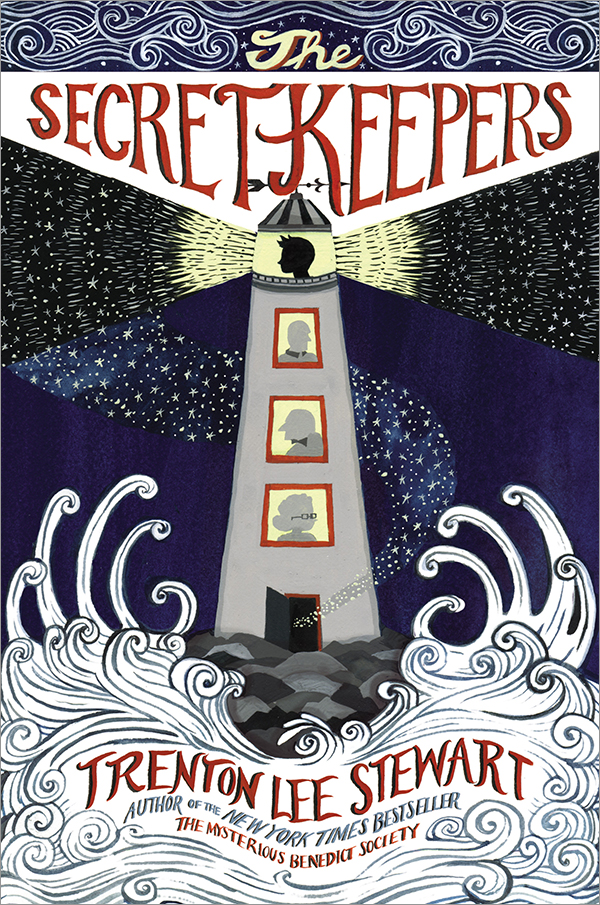
Book Review - The Secret Keepers
Seven years ago I started reading the "Mysterious Benedict Society" aloud with my kids. We had a ton of fun with the puzzles and adventures laid out in those books. So naturally when I found a new "middle grader" book from the same author I jumped at the chance to read it.
The Secret Keepers centers on the adventures of a young 11-year-old boy named Reuben. He lives in Lower Downs, one of the poorer areas of the city of New Umbra. His father died when he was a baby and his mother has to work 2 jobs to keep them afloat in their tiny little apartment. While his mother works, Reuben spends his days exploring the city and keeping a watch on the various inhabitants of the neighborhoods. As he wanders the city we learn a little bit about the "politics" of the city. A mysterious man (or creature?) known only as "The Smoke" keeps the city under his thumb. Over the years he has accumulated significant influence such that he essentially controls the government, police force, shopkeepers, etc. He has bands of spies/enforcers that Reuben (and others) refer to as "The Directions." These men go out in groups of four, each assigned to always keep watch in a certain direction (forward, behind, left, right) so that as they patrol the streets they always look everywhere. Reuben prides himself on being able to observe the Directions from positions where he can't be seen from them. This is one of his many games. His other is exploring and adventuring places he's never been before.
One morning he finds an alley with two buildings close together and a ledge higher up. He decides to see if he can lean between the two buildings and work himself up to the ledge. After a nerve wracking climb and nearly exhausting his strength, Reuben rests on the ledge and enjoys the view. It is here that he discovers a small box engraved with a name and containing an intriguing watch. He admires the beauty and workmanship of the watch and wonders if perhaps he could sell it to try and help raise his family a little bit out of their poverty. However, as he starts investigating the watch to try and find potential buyers, he learns that the Smoke has been searching for a watch precisely matching this one for many years. Wondering why the Smoke would be interested in the watch, Reuben tinkers with the watch and discovers an unexpected secret...the watch provides the holder with a temporary but amazing power. Somehow the Smoke learns that a boy has found the watch and sends his Directions out to search everywhere to try and find Reuben.
The Secret Keepers centers on the adventures of a young 11-year-old boy named Reuben. He lives in Lower Downs, one of the poorer areas of the city of New Umbra. His father died when he was a baby and his mother has to work 2 jobs to keep them afloat in their tiny little apartment. While his mother works, Reuben spends his days exploring the city and keeping a watch on the various inhabitants of the neighborhoods. As he wanders the city we learn a little bit about the "politics" of the city. A mysterious man (or creature?) known only as "The Smoke" keeps the city under his thumb. Over the years he has accumulated significant influence such that he essentially controls the government, police force, shopkeepers, etc. He has bands of spies/enforcers that Reuben (and others) refer to as "The Directions." These men go out in groups of four, each assigned to always keep watch in a certain direction (forward, behind, left, right) so that as they patrol the streets they always look everywhere. Reuben prides himself on being able to observe the Directions from positions where he can't be seen from them. This is one of his many games. His other is exploring and adventuring places he's never been before.
One morning he finds an alley with two buildings close together and a ledge higher up. He decides to see if he can lean between the two buildings and work himself up to the ledge. After a nerve wracking climb and nearly exhausting his strength, Reuben rests on the ledge and enjoys the view. It is here that he discovers a small box engraved with a name and containing an intriguing watch. He admires the beauty and workmanship of the watch and wonders if perhaps he could sell it to try and help raise his family a little bit out of their poverty. However, as he starts investigating the watch to try and find potential buyers, he learns that the Smoke has been searching for a watch precisely matching this one for many years. Wondering why the Smoke would be interested in the watch, Reuben tinkers with the watch and discovers an unexpected secret...the watch provides the holder with a temporary but amazing power. Somehow the Smoke learns that a boy has found the watch and sends his Directions out to search everywhere to try and find Reuben.
Friday, July 08, 2016
Book Review - The Wind in the Willows
My only previous exposure to The Wind in the Willows comes from Disney's animated film The Adventures of Ichabod & Mr. Toad and the Disneyland attraction Mr. Toad's Wild Ride. Reading this fun little novel was a similar and yet very different experience altogether.
The Disney movie and ride are both quite adventurous and action packed. The book does have action sequences and rising plot points but much of the novel is a quaint relaxing view into the lives and relationships of people...er, I mean, animals. The Disney films focus primarily on Mr. Toad and his exploits while the novel begins with young Mole meeting Rat and learning about life on the river. Much of the book revolves around their growing friendship and the experiences they have together.
We learn about the different motivations and lifestyles of the various creatures living on the river and in the nearby wood. An unspoken class system is explored as well as the nature of maturity and taking responsibility for one’s station in life. Mole and Rat are young carefree creatures and yet they are down to earth and acknowledge the relationship and responsibility of being part of a community. Toad is at the high end of the class structure but at the lower end of the responsibility scale. He is rather egocentric and impulsive, thinking only of his next thrill or what accolades he can obtain to brag about in his next conversation. Badger is initially presented as sort of a stand-offish curmudgeon but as you get to know him you find him as the stalwart established member of society who uses his station and responsibility to help the less fortunate even while berating them for their own behaviors that brought their world crashing down around their shoulders.
The Disney movie and ride are both quite adventurous and action packed. The book does have action sequences and rising plot points but much of the novel is a quaint relaxing view into the lives and relationships of people...er, I mean, animals. The Disney films focus primarily on Mr. Toad and his exploits while the novel begins with young Mole meeting Rat and learning about life on the river. Much of the book revolves around their growing friendship and the experiences they have together.
We learn about the different motivations and lifestyles of the various creatures living on the river and in the nearby wood. An unspoken class system is explored as well as the nature of maturity and taking responsibility for one’s station in life. Mole and Rat are young carefree creatures and yet they are down to earth and acknowledge the relationship and responsibility of being part of a community. Toad is at the high end of the class structure but at the lower end of the responsibility scale. He is rather egocentric and impulsive, thinking only of his next thrill or what accolades he can obtain to brag about in his next conversation. Badger is initially presented as sort of a stand-offish curmudgeon but as you get to know him you find him as the stalwart established member of society who uses his station and responsibility to help the less fortunate even while berating them for their own behaviors that brought their world crashing down around their shoulders.
Wednesday, June 15, 2016
Book Review - Station Eleven
If you've been paying attention to books, movies or other entertainment, you've likely noticed an increasing trend of post-apocalyptic themed stories. The novel Station Eleven follows this trend but does so in a way that I found fresh and interesting. Many of the recent post-apocalyptic novels I've seen are heavily plot driven with action-adventure stories involving survival against some ongoing threat or groups struggling against some dystopic or overbearing government or organization. Station Eleven does have plot elements of struggle and survival after the fall of civilization, but this story is much more than an explosive adrenaline filled adventure with characters scrambling chaotically and fighting each other for survival or supremacy. Rather, Station Eleven focuses heavily on character development and following the lives of a few key characters over many decades. The novel navigates back and forth in time giving us snippets of the lives of these characters before, during and after the fall of mankind. There are most certainly action sequences like those you might expect in a post-pandemic setting such as this, but there are many more sequences that spend time exploring the lives of these characters and showcasing the things that make us human. By comparing these very human scenes before and after civilization as we know it, the author presents us with some interesting ideas about what is truly important and how we deal with changes to the things that matter most.
The high level synopsis of the book is that there is an outbreak of a new strain of the flu virus with a fast incubation period and a very high mortality rate. The flu is identified but due to how fast it spreads and how fast it kills, there is just no time to adequately or effectively treat the disease. Within a few weeks, it's evident that the world will never be the same and shortly thereafter, the various advances of modern society fall into decay and gradually disappear without adequate people to create, operate and maintain them. Electricity fades away leaving mankind in darkness and reverting communication methods by a century or more. Gasoline and oil supplies decay and run out, leaving people to travel by foot or using animal power. Luxuries and modern extravagances are set aside in lieu of the need to work just for survival.
The book opens in a theatre and we see an actor named Arthur Leander die on stage. Interestingly, he doesn't die from the flu. Instead, he collapses from an unrelated heart attack. Jeevan is an EMT in the audience who leaps to the stage to try unsuccessfully to save Arthur as a child actress named Kirsten watches. As the paramedics arrive, Jeevan leaves the theatre and walks through the city, thinking about priorities and life and trying to decide what he should do. At the same time, news of the flu begins to spread even though the full extent of the problem isn't yet known. Jeevan figures out that things are worse than expected and he goes to his brother's home to try and weather the storm. We are then taken to a time fifteen years later and learn that Kirsten survived the epidemic and is now part of a traveling troupe of actors and musicians performing music and Shakespearean plays to try and bring some joy to the world they wander.
The high level synopsis of the book is that there is an outbreak of a new strain of the flu virus with a fast incubation period and a very high mortality rate. The flu is identified but due to how fast it spreads and how fast it kills, there is just no time to adequately or effectively treat the disease. Within a few weeks, it's evident that the world will never be the same and shortly thereafter, the various advances of modern society fall into decay and gradually disappear without adequate people to create, operate and maintain them. Electricity fades away leaving mankind in darkness and reverting communication methods by a century or more. Gasoline and oil supplies decay and run out, leaving people to travel by foot or using animal power. Luxuries and modern extravagances are set aside in lieu of the need to work just for survival.
The book opens in a theatre and we see an actor named Arthur Leander die on stage. Interestingly, he doesn't die from the flu. Instead, he collapses from an unrelated heart attack. Jeevan is an EMT in the audience who leaps to the stage to try unsuccessfully to save Arthur as a child actress named Kirsten watches. As the paramedics arrive, Jeevan leaves the theatre and walks through the city, thinking about priorities and life and trying to decide what he should do. At the same time, news of the flu begins to spread even though the full extent of the problem isn't yet known. Jeevan figures out that things are worse than expected and he goes to his brother's home to try and weather the storm. We are then taken to a time fifteen years later and learn that Kirsten survived the epidemic and is now part of a traveling troupe of actors and musicians performing music and Shakespearean plays to try and bring some joy to the world they wander.
Monday, April 25, 2016
Book Review - At the Mountains of Madness
I knew almost nothing about At the Mountains of Madness before starting it. Basically I knew that it was by Lovecraft and it was the story of a scientific expedition to Antarctica and the horrors they found there....see, almost nothing. After reading the novella, I read up on it a little more because I wanted to know where it fit in with some of Lovecraft's other stories. This book is one of his later works, written 5 years after his more famous Call of Cthulhu. I was curious about the publication chronology of his stories because, similar to some of his other stories, there is a great effort given to the scholarly veracity of his tale. Specifically, this story involves researchers from the Miskatonic University (as referenced in many of his other stories) and references some of his other writings as well known books present in the university library. The Cthulhu Mythos and the "Elder Things" is well known by the characters in this story and it is presumed to be well known to other researchers and readers of this report.
The story is told hesitantly by a member of an expedition to Antarctica that happened in ~1930 and made some amazing discoveries. The narrator, William Dyer, explains that the reader is likely aware of some of the official reports that came by means of wireless transmissions during the early portions of the expedition but very few people know the entire story. Dyer says that he would much rather let the true story remain hidden forever but he feels like it must be told now in an effort to prevent subsequent expeditions from trying to pick up where his left off. He is afraid that additional expeditions will encounter the same sort of disasters as happened to him or, worse yet, they could set in motion larger scale horrors to the world.
Lovecraft, through Dyer, gives a very detailed account of the expedition in a manner that is both very scholarly and very accessible. Specific and minute descriptions are given of the purpose of the expedition, the tools and processes to be used and the findings made by the team through their various samplings and experiments. The group consists of geologists, biologists and other scholars with high-tech equipment used to bore deep into the frozen wasteland and excavate samples in the hopes of studying rock, soil, plant and animal fossils, etc. They have numerous small airplanes at their disposal as well as dogsled teams.
**
[CAUTION: minor plot spoilers -- Skip the next ~2 paragraphs to avoid the spoilers]
The story is told hesitantly by a member of an expedition to Antarctica that happened in ~1930 and made some amazing discoveries. The narrator, William Dyer, explains that the reader is likely aware of some of the official reports that came by means of wireless transmissions during the early portions of the expedition but very few people know the entire story. Dyer says that he would much rather let the true story remain hidden forever but he feels like it must be told now in an effort to prevent subsequent expeditions from trying to pick up where his left off. He is afraid that additional expeditions will encounter the same sort of disasters as happened to him or, worse yet, they could set in motion larger scale horrors to the world.
Lovecraft, through Dyer, gives a very detailed account of the expedition in a manner that is both very scholarly and very accessible. Specific and minute descriptions are given of the purpose of the expedition, the tools and processes to be used and the findings made by the team through their various samplings and experiments. The group consists of geologists, biologists and other scholars with high-tech equipment used to bore deep into the frozen wasteland and excavate samples in the hopes of studying rock, soil, plant and animal fossils, etc. They have numerous small airplanes at their disposal as well as dogsled teams.
**
[CAUTION: minor plot spoilers -- Skip the next ~2 paragraphs to avoid the spoilers]
Wednesday, April 20, 2016
Book Review - The Name of the Wind (The Kingkiller Chronicle: Day One)
The Name of the Wind is one of those books that's received a ton of hype for years and has been both on my radar and on my shelf to read for quite some time. For the past couple of years it's collected dust on my bookshelf largely because I felt a little daunted and wary of picking up a sprawling epic fantasy. This is the first book in (at least) a trilogy of books telling the life history of Kvothe (pronounced to rhyme with "quoth"). Seeing the book clock in at over 700 pages and knowing there are at least 2 additional books, I was a bit uncertain if I wanted to take the risk on that kind of investment (having been burned in the past by other sweeping fantasy tales that fell flat after hundreds and hundreds of pages). Still, the hype continued to build and so I finally picked it up and dove in.
The first thing I noticed is that the style, voice and language of this book are unlike many other fantasy books (and even many other novels) that I've read. In many ways, it doesn't feel like the stereotypical fantasy novel most people would expect. The author, Patrick Rothfuss, has an almost poetic style in that he adds flourish and stylistic elements to otherwise mundane sentences. There have been some books I've read where an author tries to do this and it comes off as pretentious. Fortunately here, the author presents his language casually and with enough fluidity that it made for a beautifully enjoyable reading experience that really made the world and the stories more vibrant and interesting. Additionally, Rothfuss' story includes many mundane details that most fantasy tales disregard...the banality of daily life such as eating, working, shopping, etc. In that regard it felt more like a sprawling 19th century fiction from someone like Charles Dickens rather than a 21st century high fantasy novel with magic and demons. To me, this was a very refreshing and exciting change but I can see where some readers might get bored or bogged down with the more methodical storytelling in place of constant intrigue, action and adventure.
The story is broken into a couple of different plot lines. We have the "present day" in which Kvothe is the owner/operator of a small wayside inn and bar tucked into an average little village. We catch a few glimpses early on that tell us he is more than a simple innkeeper/barkeep. These glimpses expand as a man known as the Chronicler shows up and asks permission to interview and write the biography of Kvothe the adventurer. This begins the second plot line told in Kvothe's own voice beginning during his early childhood with a traveling group of performers (Rothfuss' version of gypsies). We learn of his aptitude for acting, music and his interest in the magical science known as "sympathy" which he studied under a scholar traveling with the troupe. His passion for learning leads to a desire to go to University to learn more. His plans are struck with a major detour when tragedy strikes the troupe and sends Kvothe into homeless poverty. Once he eventually makes his way to University, he has more struggles to try and work his way into the system and become all he wants to become. The historical story is interrupted from time to time with Kvothe taking a brief break to deal with things in the inn...which provides opportunity for some foreshadowing/reminiscing that provide minor hints and spoilers of things to come.
The first thing I noticed is that the style, voice and language of this book are unlike many other fantasy books (and even many other novels) that I've read. In many ways, it doesn't feel like the stereotypical fantasy novel most people would expect. The author, Patrick Rothfuss, has an almost poetic style in that he adds flourish and stylistic elements to otherwise mundane sentences. There have been some books I've read where an author tries to do this and it comes off as pretentious. Fortunately here, the author presents his language casually and with enough fluidity that it made for a beautifully enjoyable reading experience that really made the world and the stories more vibrant and interesting. Additionally, Rothfuss' story includes many mundane details that most fantasy tales disregard...the banality of daily life such as eating, working, shopping, etc. In that regard it felt more like a sprawling 19th century fiction from someone like Charles Dickens rather than a 21st century high fantasy novel with magic and demons. To me, this was a very refreshing and exciting change but I can see where some readers might get bored or bogged down with the more methodical storytelling in place of constant intrigue, action and adventure.
The story is broken into a couple of different plot lines. We have the "present day" in which Kvothe is the owner/operator of a small wayside inn and bar tucked into an average little village. We catch a few glimpses early on that tell us he is more than a simple innkeeper/barkeep. These glimpses expand as a man known as the Chronicler shows up and asks permission to interview and write the biography of Kvothe the adventurer. This begins the second plot line told in Kvothe's own voice beginning during his early childhood with a traveling group of performers (Rothfuss' version of gypsies). We learn of his aptitude for acting, music and his interest in the magical science known as "sympathy" which he studied under a scholar traveling with the troupe. His passion for learning leads to a desire to go to University to learn more. His plans are struck with a major detour when tragedy strikes the troupe and sends Kvothe into homeless poverty. Once he eventually makes his way to University, he has more struggles to try and work his way into the system and become all he wants to become. The historical story is interrupted from time to time with Kvothe taking a brief break to deal with things in the inn...which provides opportunity for some foreshadowing/reminiscing that provide minor hints and spoilers of things to come.
Friday, March 25, 2016
Book Review - The Girl on The Train
This debut novel by Paula Hawkins received a ton of hype and buzz early on and was lauded as one of the best thrillers of the year. Due to plot twists and turns, the plot synopsis is intentionally vague. Basically there is a woman named Rachel who rides a commuter train back and forth every day. There is a stretch of track where the train always slows and sometimes spots. The track is along the backside of a suburban neighborhood where Rachel has taken to watching the people. In particular there is one young couple she's become entranced with and has even gone so far as to make up names ("Jess and Jason"), occupations and lifestyles for them. She uses them to vicariously live out a sort of "happily ever after" fantasy that she doesn't have herself. Then, as the synopsis explains, one day she sees "something shocking." Shortly after, a shocking report appears in the news and Rachel starts trying to fill in blanks and make what she believes are logical leaps which leads her to go to the police and to start her own investigation of the affairs of the neighborhood.
The story is interesting and it's set up in a Hitchcockian kind of way where readers (and Rachel) are only given partial information and it is unclear exactly how reliable that information may be. Most of the book is told from Rachel's point of view and it is very quickly apparent that she is a very unreliable narrator. Her perceptions and her memories are imperfect, cloudy and full of holes. She is impulsive and quick to take action on her perceived beliefs no matter how ill founded they may be. To one extent, I can buy-in to her as a very unreliable narrator but on the other hand it was frustrating (and sometimes unbelievable) to see her constantly making such bad decisions even when she acknowledges her own failings. She is self-aware of how little she truly knows and how reckless she is being with her actions, and yet she continues pushing forward from bad to worse. Eventually things start working out a little better and she begins unraveling what's truly going on, but the meandering in the middle of the book was frustrating at times. I did like that other characters were equally frustrated with Rachel's bad decisions. It made me feel a little vindicated in my own frustration.
Wednesday, March 16, 2016
Book Review - The Game of Lives (Mortality Doctrine Book 3)
The Game of Lives is the conclusion to Dashner's "Mortality Doctrine" series and while it wrapped things up sufficiently, it felt a bit unfulfilling, unbalanced and confused. The concept remained interesting and the plot/pacing was generally good but the experience just didn't finish out as well as I'd hoped. I think there was a combination of me burning out on the idea as well as too many plot twists and turns leaving the overall story progression a bit convoluted and stretched.
For those who haven't read the first two, just know that there will be some general series spoiler information in this review...consider yourself warned. As a quick catch-up, this book is set in a future in which a giant Virtual Reality game system (the VirtNet) has been set up where people strap themselves into bed/coffin like devices and actually "sleep" into the programming. Book One introduced us to an Artificial Intelligence persona (called Tangents) known as Kaine who has figured out a way to allow other Tangents to take the place of humans and to "wake" into the real world with a real "mortal" body. Michael and his friends are approached by VirtNet and government officials and asked to help find and stop Kaine. Once Michael finally reaches Kaine, he finds out that they are both Tangents and that Kaine has chosen Michael to be one of the first Tangents to cross over...which he does at the end of the first book. The second book follows Michael now awake in the real world in a stolen body trying to find his friends and figure out who he can truly trust....Kaine, the VirtNet, the government, or nobody at all. The second book ends with Michael and his friends being busted out of prison after having effectively disabled the VirtNet and declared a type of war against both the VirtNet officials and against Kaine and his plans.
Monday, February 15, 2016
Book Review - A Scanner Darkly
I decided to start reading some of the work of Phillip K. Dick and for now I'm relying on the titles available at my local library. When I picked up A Scanner Darkly, I didn't know anything about it other than that they made a "rotoscope" film about a decade ago but I never saw the movie and didn't pay enough attention to know the plot. Reading the synopsis on the back of the book was very intriguing...it sounded like sort of weird split-personality situation where the protagonist was a policeman who was hunting after himself. As I started reading the book, I realized that my interpretation of the synopsis was a little bit off, but the book was still intriguing.
The story revolves around the protagonist, a man named Bob Arctor who is a flaky drug user in Southern California living with a bunch of other druggies. He also happens to be an undercover narcotics officer trying to work his investigation up the drug traffic chain to find the big suppliers at the top. The trouble is, Bob actually did start using some of the drugs to maintain his cover and now he's a full-blown addict and is on the verge of a mental breakdown as a result.
Tuesday, February 09, 2016
Book Review - You're Never Weird on the Internet (Almost): A Memoir
I've been a fan of technology and video games for ages. I helped keep our family computer up to date and installed our first modem back in the day so I could connect to BBS-es and do some dial-up gaming with friends. When the Internet came around, I built my own little set of cheesy web pages to post stories, random info and just experiment with what I could do. When YouTube exploded onto the scene, I had fun trolling the crazy new videos to see what was out there and have fun reveling in the geek-dom of everything. It was around that time that Felicia Day brought "The Guild" to the Internet and pioneered the new media delivery mechanism to become one of the first "Internet Web Actors." I laughed along with other fans at the Guild and kept up with some of her work peripherally over the years. I was never a huge "fanboy" but I have subscribed to her various "channels" to see what new stuff is coming out. So when one of those "new things" was an autobiography, it seemed only natural that I'd pick it up and read it.
One thing I immediately noticed as I started reading was that this book is definitely written in Felicia's "voice." If you aren't familiar with her work (meaning the stuff that she scripts herself or has creative license with), that won't mean much to you but I found it a lot of fun to have the book really written in her voice. It made it feel that much more "real"...like she had just pulled up a chair and was telling me about her childhood and her experiences. As a side-note to be aware of...since it is in her voice, there is some vulgarity (aka - swearing). Not a ton, but if you've only seen her "prime time" TV acting, it might put you off a little bit...just be warned.
Monday, February 01, 2016
Book Review - The Ocean at the End of the Lane
Over the years I've decided that I enjoy scary or creepy stories but I'm not a huge fan of the "horror" genre for books or movies because they often end up having too much gore, violence, sex, profanity or other "R rated" content that I'm not just a fan of. As such, I've stopped reading a handful of books that otherwise seemed to have a very cool premise. Sadly, one author who's been set down frequently has been Neil Gaiman...and yet, some of his books have been absolute favorites. I've come to the conclusion that I'm a fan of Gaiman's children or YA books or else his shorter stories (which seem to be less graphic). Anyway, I read a lot of great reviews about The Ocean at the End of the Lane and so I gave it a try...and I've very glad I did.
As I read the book, I tried to categorize the book in terms of audience or style and found that it teetered on the edge between categorizations. The book focuses on an adult male protagonist returning to his old hometown for a funeral and coming to terms with some strange occurrences of his youth. With the main story arc taking place in his youth, it seemed a good candidate for that "YA" categorization. But in terms of what's become the stereotypical themes and tone of contemporary YA, this book leaned more towards an adult novel. It had some darker, heavier themes beyond the simple "coming of age" teenage story or the standard teenage adventure novel. At the same time it did have some youthful elements that could almost appeal to older children. While a bit heavy for young children, the story does explore themes of children having to deal with the "bad" elements in the world such as death or unkind/hateful people in ways similar to Gaiman's popular children's novel Coraline. I felt like some of the scenes in Ocean are a bit scarier than those in Coraline so I'd bump it up to a Middle Grader or higher age rating but otherwise I feel like the book is good for all ages.
Subscribe to:
Comments (Atom)