Showing posts with label Books 2009. Show all posts

Saturday, January 09, 2010

Favorite Books read in 2009

Reading update from 2009 and goal/plan for 2010.

Well, for those who've followed my blog over at least the past year, you may be aware that I had a goal to read 50 books over the course of 2009. There were some that I really enjoyed, others that were an annoyance to finish and others that were alright but nothing to write home about.

Now, if I were to include the various young children's books I read with my kids (Bernstein Bears, Barbie, Arthur, Sweet Pickles, etc), then I most certainly achieved the goal of 50 books. By excluding those short kids/picture books from my official list of "books read", I don't want you to think that I have anything against those books. On the contrary, I really love a lot of those books and really enjoy reading them. And if I come across one that I find particularly new or noteworthy, I will likely include it on a future list. However, with most of those young readers, I have already read the book before and for those I haven't read already, the time and investment in reading those books is generally very little. And honestly, the purpose of my goal is to stretch my reading habits. Some may argue that the graphic novels I included should be left off for the same reason. Honestly, there are a few graphic novels I read that I didn't include. Those I did include were those I either particularly enjoyed or those I felt needed some extra attention.

So, over the course of 2009, I read the 43 books indicated on this page. In many/most cases I also wrote a review…ranging from a couple of paragraphs to a couple of pages. The reviews can be found here on my blog as well as on Goodreads, Library Thing, Selfari and even some on Amazon.com and BarnesAndNoble.com.

Looking over the list, here are some of my favorites from 2009 (in no particular order):


Both of the books in the Mysterious Benedict Society series

I really enjoyed this newly discovered series of children's books. The protagonists are very intelligent young kids just slightly older than my oldest. While the books are targeted at younger kids, they are very smart, witty and intriguing. At times the writing did drag a little bit, but it made up for it with plot and characters that were well thought out and well executed.


Captain Blood

Being a lover of all things pirate, I was excited to get into this book. I must admit that some other pirate adventure books can be tedious and boring at times. Captain Blood did occasionally slow down to provide historical or political context, but the moments felt well placed and I was always returned to the suspense and adventure before I became bored with the narrative housekeeping. Additionally, I really loved that the plot involved more than a simple pirate tale of looting and sacking. Instead, it is a well thought out story that creates a very vivid and full character in Captain Blood.


The Beekeeper's Apprentice

I gave this book to Lynette as a gift a few years ago and has since voraciously devoured the rest of the series while continually proclaiming how good these books are. Enjoying Sherlock Holmes myself and being a fan of mysteries, I gave it a try and I have to agree with her that the writing and the mystery is very well crafted. Over time, I intend to catch up with her in the series to find out where Sherlock Holmes and Mary Russell go together.


The Lightning Thief
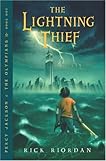
This series was recommended to me by a neighbor and I'd often heard it touted as "Harry Potter meets Greek Mythology." I'm honestly VERY skeptical anytime something is compared to anything that has become pop culture. With Lightning Thief, I was pleasantly surprised to find a funny, fresh adventure with great characters and wonderful imagination. I'm anxious to continue the saga (currently reading book 2)


Fables: Volume 1 - Legends in Exile

I thoroughly enjoyed the remained fairy tales in this book. The modern day crime novel is a fun place to find them duking it out and I think the graphic novel was a great way to present this story. I look forward to reading more in this series and watching these intriguing characters develop.


Frankenstein

I had never read Frankenstein before and could only base my knowledge of the movies and other cultural references I had encountered. Instead of a pulp horror book, I was surprised to find a very thoughtful novel which provided a lot of insight and thought into humanity and social relations.  I really liked the man vs monster discussions as well as thoughts about the responsibilities of a creator...human or otherwise.


Tess of the d'Urbervilles

While this is a fairly depressive novel filled with one tragedy after another, I found this to be an entertaining and insightful read. I enjoyed the portrayal of 18th century England as well as the depiction of rural/farm life around the country. The plight of Tess through her life was a really intriguing read. While not a happy story by any means, I really enjoyed this book.


Rapunzel's Revenge

Another fairy tale retelling in graphic novel form, this time by Shannon Hale (who I also read for the first time this year and enjoyed). I really liked the whimsical nature of this story as well as the interesting twists and turns. The artwork was a lot of fun and the read was definitely enjoyable.  I was impressed with Hale's storytelling and creativity.  I'm also excited to know that a sequel to this book is being released VERY soon (this week?).


Red Harvest

This book really hit me as an interesting new find. I'd never really read anything in this particular genre…the "dimestore crime novel" or "gritty noir" style. It's interesting to me that this was written in the early 20th century. Admittedly, it is set in that era, but the language just feels so picturesque and animated as compared with other novels from the early 1900s (not to say those other novels were bad). I really loved the narrative voice and characterizations in this novel. The plot was fast paced and exciting with a lot of great twists and turns. It was gritty, exciting and a lot of (violent and crazy) fun.


The Sun Also Rises

Speaking of novels from the early 1900s, I read my first Hemingway novel this year and really enjoyed it. For some reason, I'd always thought Hemingway's work would be very obtuse and unapproachable. I actually found it to be a much simpler read generally but with a lot of nuances and symbolism that was painted between the lines and I'm certain much of it passed by transparent to me. Still, the story and characters in this novel were very engaging and really intriguing to follow. The style was fluid and comfortable. I really liked this novel and look forward to more Hemingway in the future.


Now, just because a book from my read in 2009 list didn't make my favorites list above doesn't mean it wasn't a good book or wasn't worth reading. I pushed through and finished all of them, which says something either about the book or about me. Some were certainly much better than others and there are a number of them that I won't be recommending, but there are few (if any) that I would actually dissuade someone from reading.

I'm looking forward to another great year of reading. My goal is once again to try and read 50 books this year. Even if I don't reach 50, as long as I meet or surpass last year's count of 43, I'll be happy….especially if I like as many this year as I did last year.

Happy Reading!


Sunday, December 27, 2009

Review - The Scopes Trial (A Brief History with Documents)

I remember vague references to the Scopes Trial from High School classes and various discussions on the evolution debate. This book is a great compilation of the data in and surrounding that case. I really enjoyed the introduction and commentary by the author that helped orient some of the texts and discussions. I found myself laughing out loud at some of the transcripts from the courtroom proceedings. And I also appreciated and enjoyed the supplemental material at the back (related essays, political cartoons, etc.). Overall, this book provides some great insights into the evolution debate (many of the same arguments continue almost verbatim today) as well as into many of the problems with our education system.


3.5 out of 5 stars


View all my reviews


Wednesday, December 23, 2009

Review - The Big Money

The Big Money is a very interesting and compelling novel that I'm glad to have read. It's actually the third book in the "USA Trilogy" following American culture through the first 3 decades of the 20th century (each novel covering one decade). The Big Money takes us through the 1920s.

The style is experimental and at times a little odd because of that. Had I not been reading this as part of a class or with some notes to help guide me, I'm certain I would have missed a lot of the nuances.

There are 4 different writing threads throughout the novel:
* Lives (actual story arcs of fictional characters)
* Biographies (mini-biographies of notable characters such as Ford, Hearst, and others)
* Newsreels (snippets from newspaper, radio, pop culture and other elements…pieced together poetically to convey a thought or thread)
* Camera Eye (commentary on what's going on…a sort of personal context outside of the story)

The way the novel is pieced together is very intriguing and made for fun reading. It provides some very interesting insights into what social, political and cultural life was like during this timeframe. The size and content can certainly be daunting, but the presentation is in bite-sized chunks which makes it more manageable. Still, I would recommend you pay close attention and perhaps have a quick link to wikipedia or other reference material in order to get the full perspective.


4 out of 5 stars

View all my reviews


Tuesday, December 22, 2009

Review - The 7 Habits of Happy Kids

I must say I was initially skeptical about seeing the "7 Habits of Highly Effective People" transitioned into a children's book. While I enjoy the 7 Habits and the principles and concepts taught in that book, I wasn't sure how well it would translate into something that young kids could grasp onto. I was pleasantly surprised.

I read the book with my kids and they all really enjoyed it and have asked me to read various chapters to them again and again.

The book is divided into a chapter for each of the habits. There are cute animal characters used to teach and represent the various habits and to work through situations that can be addressed by applying the habits. Each chapter is written in language appropriate and accessible to young kids and uses plot and story elements they can relate to.

At the end of each chapter is a page with teaching guidelines for parents as well as some questions to ask and discuss with the kids. My kids, especially Julia, absolutely love responding to the various questions and coming up with solutions to problems.

The artwork is great. The stories are fun. The questions and discussions are productive and insightful. I'm not sure yet how much influence this book will have on my kids and their behaviors and habits. But at the very least, it's a good influence that will hopefully rub off on them to some degree.


4 out of 5 stars

View all my reviews


Wednesday, December 09, 2009

Reviews - Gentlemen Prefer Blondes -and- But Gentlemen Marry Brunettes

I first saw the Marilyn Monroe movie Gentlemen Prefer Blonds as a youth years ago and have a vague recollection of it being whimsical fun but my general memory of the film is pretty limited. I need to go back and watch it as an adult and see it from fresher eyes.

Reading these books was a great experience. They were generally a quick read, although it took the first couple of chapters for me to get used to the style…which slowed me down as I re-read segments to double check grammar and spelling. Anita Loos does an exquisite job of capturing the singular voice of Lorelei Lee. I absolutely love the narrative style and the oblivious ignorance with which Lorelei approaches the world.

The story itself is not terribly remarkable. It largely plays out as a series of humorous anecdotes as Lorelei and her friend Dorothy travel the world to be properly "educated." Presenting the story from Lorelei's point of view makes her own comments and actions all the more hilarious while also making Dorothy's comments so much fun, especially since Lorelei never really understands the full meaning of her friend's remarks.

I really enjoyed the style and would love to read more by Loos. She started her writing career as a screenwriter and as I looked at her list of novels is fairly short, which is a shame.

Don't expect anything really deep going into these books (unless your idea of depth is the same as Lorelei's, in which case this book may be over your head). These books are a fabulous portrayal of life in the 20s as seen through the eyes of the gold-digging blonde (in the literal and stereotypical sense). It's a great light-hearted satirical look at life and romance.


4 out of 5 stars

View all my reviews


Tuesday, December 08, 2009

Review - Fantastic Mr Fox (book)

Fantastic Mr FoxI bought this book for two reasons:
1. I'd just seen a preview for the movie and thought it looked pretty funny and I liked the animation style
2. I've enjoyed the Roald Dahl books I've read previously

With regards to the movie influence, I haven't yet seen the movie. Based on the reviews I've read, it sounds like a fun little film but definitely a bit different than the book. Eventually I'd like to watch it.

As to the book itself, it was a very quick read overall although we did read it over the course of a week or so reading a chapter or two each night with the kids.

As with the other Dahl books I've read, this one is full of great writing and fun artwork. The kids made sure to remind me to show them the pictures on every page while I was reading and they really got after me if I forgot.

The characters were lovable and humorous. I loved the matter-of-fact nature of Mr. Fox as he works through the numerous problems that come his way. I really enjoyed the caricature-like portrayal of each of the three farmers that Mr. Fox must outfox. The other members of the fox family are great and I enjoyed the other animals we get to know as well.

The story itself is fairly simplistic and rolled out like an old animal fable from Aesop or others. As such, I think I expected it to take more of a moral high ground. At the same time, knowing it was Dahl, I should have expected the tongue-in-cheek nature that I found.

As the foxes were cornered in their burrow and desperately worked to escape, I enjoyed the dialogue between the family. It was well portrayed and felt fairly realistic. Once they finally had a semblance of safety, it was fun to watch Mr. Fox take charge and go forward with a new plan.

The main detractors for me took place in the last ~third of the book.

First, there is a point where Badger and Fox are talking about the morality of their actions…of stealing food from the farmers. The discussion was framed rather strangely especially considering the general nature of wildlife surrounding farms. While the discussion ended up concluding 'well-enough', I really would have preferred either a bit more elaboration from Fox, a bit more debate from Badger, or a general removal of this morality sequence.

Second, when Mr. Fox, his young Fox, and Mr. Badger end up in the cider house, it's pointed out that the cider is indeed alcoholic. Furthermore, all of the animals there (including the child) take a pull off the cider and revel in the wonderfulness of it. Later the cider is taken back home for a feast and there is more joy in its consumption. The alcoholic nature isn't played up exceedingly and I honestly don't think my kids picked up on it (or if they did, they didn't make a point of it…Jason just told Julia that "cider" was "apple juice" and they left it at that). Still, I see some concern portraying the wonderful nature of liquor in such a young, fable-like book.

Third, although we are to believe and understand the carnal nature of these carnivorous animals living among farmers…there is also the strange juxtaposition of a family of rabbits attending the feast. If the food supply was in danger, I can't imagine the rabbits surviving for the number of days that they did. This just felt like a strange inconsistency.

In the end, this was a very cute book with a fun cute little story and was an entertaining read. While it read like a Fable, I'm not exactly sure which direction we should look to find a clear moral. Obviously we are intended to relate with Mr. Fox and the other animals. The farmers are presented as particularly odious, vengeful and despicable. At the same time, we have the morality conversation between Badger and Fox that isn't clearly resolved and leaves question as to the morality of Fox's actions…which then presents some justification for the actions of the farmers.

On the plus side, this book is definitely geared towards young readers and as such I'm certainly overthinking the need for a moral. The kids enjoyed the story and saw Fox's victory over the farmers as inspiring and funny.

Which is just as it should be.


3.5 out of 5 stars

View all my reviews


Thursday, November 12, 2009

Review - The Sun Also Rises

I have had very little experience with Hemingway prior to picking up this book. For some reason I had it in my head that his writing would be haughty, inaccessible and laborious to read. I was pleasantly surprised that none of my preconceptions were true.

The writing style in Sun Also Rises is fluid, simple and easy to follow. His sentences are short and easy to follow. His dialog is natural. His descriptions are straightforward and to the point.

Even though the simplicity of the style made the reading quick and easy, I quickly saw that there was a lot going on "between the lines." As terse as much of the writing is, it was apparent that what was left out was just as important (perhaps more so) than what was on the page.

As a case in point, nowhere in the book does Hemingway explicitly identify the nature of the wound that Jake received in the war. In fact, if a reader wasn't paying close attention, the importance of that wound would quickly fade into the background. However, there are plenty of clues as to the type of injury and the nature and extent that it has affected Jake's life. The injury was probably the largest case of something "not written" that was important. There were a few other instances where I felt like Hemingway was leaving out significant details while alluding to their importance.

The character development in the book was very interesting.

With the first person narrative, we only really get into Jake's head (although, as mentioned above, there's plenty of detail he leaves out even about himself) and everything is tainted by his view of life. At first his view felt fairly realistic and trustworthy but it quickly became apparent that he was jaded and cynical.

I felt like we got a pretty good feel for Cohn by the end of the novel. His character seemed to be the most straightforward and easy to understand and also seemed to follow along with the narrator's initial description of him in the opening.

Lady Brett Ashley's character was a bit more troublesome. She generally felt like a party girl who absolutely loved life and was always happy, but as the layers came back, she had more emotional depth than first expressed.

The other characters in the novel were intriguing but again it was hard to unravel their motivations and get at the heart of their character because their words and motives were often veiled by volatile or sullen behavior. The various lovers of Brett and friends of Jake were interesting but seemed to serve as reflections to play off Brett and Jake and let us gain more depth into those personalities. The drunken repartees and the random banter was funny at times, harsh at others.

The overall tone of the book was almost paradoxical. As readers, we're following around a group of expatriates as they party and travel around Europe reveling and enjoying life for all its worth. From a high level, you would think that this would be great fun. But as we drill down into the hearts and heads of these characters, the true story became rather depressive. Instead of a semi-aristocratic party crowd, in the end it felt like we were following a bunch of slovenly lounge-a-bouts who only lived for the next drink.

Both Brett and Jake had a yearning for some true emotion or passion in life but neither was able to find a clear path to that state of happiness. Instead, all of the characters lived lives of broken, or disabled, relationships. They wandered aimlessly through life spending money like water in order to try and find some sort of emotional high (or perhaps a liquor induced numbness) to detract from their otherwise unfulfilled lives.

After reading this book, I have a desire to seek out more Hemingway and read more of his stuff. I really enjoy the style he used in this book and found his characters intriguing and approachable. The story and emotions were thought provoking and effective.

Definitely recommended.


4 out of 5 stars
View all my reviews


Monday, November 09, 2009

Review - The Mysterious Benedict Society and the Perilous Journey

This is the second book in the "Mysterious Benedict Society" series and while it can definitely be read as a stand alone book, I would recommend reading the previous book before starting in on this one. The previous novel gives a lot of character development and some insight into the nuances of the characters as well as what to expect. Besides, the first book is great and shouldn't be missed if you can help it.

That said, we enjoyed the second book as much as the first. The same wonderful characters are present and ready for a new adventure. The setting is 1 year after the previous book ended. The children are on their way to a reunion with Mr. Benedict who has planned a sort of treasure hunt for them to hone their skills on the road to a great celebration. Unfortunately, Mr. Benedict is kidnapped before the children even arrive and thus the situation changes slightly.

The puzzles and around-the-world adventure are a ton of fun. The characters themselves have grown over the 'past year' and have some new mannerisms and skills. Constance in particular has developed some new traits that will serve the society well.

The overarching mystery in this book is once again thoughtful and fun to unravel. The framing of the adventure within a globetrotting treasure hunt is a lot of fun. Personally I would love to go on that sort of an adventure. Bringing back Mr. Curtain's threatening bodyguard/mercenary "Ten Men" added a great element of suspense to the chase. The climactic confrontation with their adversaries was fairly intense, especially for a children's book.

I found this book just as enjoyable as the first book and am glad to see that the story has been successful enough to warrant a series. I'm looking forward to seeing what sort of adventures the kids encounter in future books.


4 out of 5 stars
View all my reviews


Tuesday, October 13, 2009

Review - The Professor's House

I had a hard time deciding how to review The Professor's House. The plot itself is very straightforward and easy to describe. The characters are vivid and well-defined which adds to the realism of the novel. But it seems to me that the meat of this novel is in the themes and nuances.

I have read some of Cather's short stories many years ago and only have vague memories of them other than a memory that she had exquisite attention to detail. As I read this book I found that memory to be true. The writing vibrantly presents minute details to the reader…from the shape and texture of a hand to the nature of a dress or necklace to the depiction of setting both in and out of doors.

Her characters are likewise detailed. We are held at a close third person so we don't actually get into the characters' heads, but the detailed account of appearance and action allows the reader to feel very intimate with the characters.

The layout of the book is interesting in that it consists of three "books." The first book is entitled "The Family" and follows the Professor as he works to finish his own writing while teaching and balancing the various dramas unfolding in his life and the lives of his family members. The second book is "Tom Outland's Story" and is the first person narrative of Tom, an old student of the Professor and friend of the family who is now dead (from WWI) but left behind an invention and legacy that resulted in great wealth for one of the Professor's daughters. The final book is entitled "The Professor" and is a very short wrap up of the novel which focusses on thoughts, emotions and actions of the professor after he reads and ponders Outland's story.

The overarching plot of the book is interesting if not terribly engaging. There were moments of drama and emotion that drew me in, but there were other segments that were almost boring with the mundane interactions.

As I mentioned initially, the meat of the novel though isn't the plot itself, but the themes and emotions it instills.

Looking to these themes, part of this book seems to be an exploration of emotional displacement and emotional paralysis or release. The Professor is very attached to his old house and his work and doesn't want to move into the new house with his family. Outland is almost a portrayal of a return to the past for the professor and in the end, Outland's story provides an almost existential release to the professor. The claustrophobia of the old house and the room in which the professor works serve as a metaphorical trap that is holding the professor hostage in his current/past life/behavior and causing emotional turmoil and angst from which he can't see a clear escape.

At a higher, more sociological level, the novel portrays some interesting counterpoints on society. The Professor is doing well enough off teaching at the university and does even better once he receives an award for his writing. His two daughters are well enough off as well though one is moving into the "upper class" while the other is sitting fairly "middle." The family interactions and conversations give interesting insight into the class reactions of the era and some of the internal and external results of class mobility. As the professor's daughter and son-in-law gain their wealth and rise to a higher social status, there are jealousies and even some resentment and anger both within and outside of the family.

Looking at the writing, it is clear that there are MANY levels at work in this novel. Cather's frequent use of color helps categorize different themes or values. Her descriptions of the houses, rooms and other settings set the balance between the different classes or social situations. To further illustrate that NOTHING appears to be arbitrary in this book, it was pointed out to me that there is particular significance in the name of the ship that Outland takes to the war, the name of the ship that the Professor's family returns home on, and even the book that Outland uses to study latin.

So, even though the book's plot isn't terribly engaging, I can see this work as having a lot of valuable insight into the social and mental ideas of the 1920s, many of which have relevance today especially given the almost parallel economic situation around us.

While it's not likely something I'd read over and over, it is something I can recommend to those interested in human behavior, the 1920s, or life in general. Cather paints a vivid and beautiful picture of a family…not a perfectly adjusted and blissfully happy family, but a realistic, flawed and interesting family.


3 stars out of 5

View all my reviews


Wednesday, October 07, 2009

Review - Captain Blood

I've loved pirate adventures for as long as I can remember. I've picked up Sabatini's novels at Barnes & Nobel so many times it's pathetic…what's more pathetic is that I never bought one…until this past summer.

Part of the tipping point was that The Classic Tales podcast was offering an audiobook version of Captain Blood at a stellar price. Add to that the fact that BJ Harrison does a wonderful job in his readings, and I was determined to pick up the audio book and the novel itself for some summertime reading. Starting in August, I would listen to segments of the audio book and then also read passages from the novel to catch up and to glean more depth (the audio was unabridged, but since I was driving, I occasionally missed bits while concentrating on the crazy drivers around me).

The adventure of Captain Blood is amazing. The writing is beautiful and captivating. Peter Blood's wit and logic are wonderful and help create him as an amazing hero, pirate and gentleman. His resolve is indefatigable. His creativity and persistence are superb. His adventures are tense and exciting while also being well crafted and believable.

Sabatini creates in the world of Captain Blood, a vision of 17th century Caribbean that falls right in line with everything that encapsulates my visions of buccaneering pirates sailing the seas.

The characters are vivid and believable. There are certainly stereotypical typed characters, but even with these, Sabatini adds subtle nuances to create some depth. To the central character of Blood, I found myself sympathizing and relating to intimately. At times he felt a little too cool and collected, so I was glad that, as we reached the climax and started to wrap things up, his personality took on a harder edge based on the trials and his even keeled personality took on a cynicism worth exploring. He became a truly n-dimensional swashbuckler that I'll hold up for examination when diving into other pirate adventures.

While this story was filled with tons of wonderful adventure, excruciating tension, and exciting scenes of ingenuity, there were also some passages that slowed the pace down considerably through historical narrative and exposition on the nature of things in this time and place of history. In spite of slowing things down, these passages were still very interesting and added a wealth of depth to the story. I merely point this out to warn potential readers who are looking for a non-stop adventure that there will be moments of expository narrative as you sail the seas with Blood.

In addition to these historical interludes, readers should also be aware that a budding romance adventure lurks beneath the surface here. This certainly isn't a romance of the Victorian style such as you might find with Jane Austen, but there is a romantic feel…both in terms of romanticizing the life and times and in terms of an actual romantic relationship between Blood and another character. To those adverse to romance in their adventures…don't worry, the romantic scenes are short enough that you should survive discussions of culture, civility and the nature of man while Blood 'chews the fat' with the girl of his dreams. I actually found the romance a delightful addition to the narrative. Like the adventure itself, the romance was well constructed and full of tension and problems. In fact, I sometimes found myself more frustrated at the perils of romance than at the perils of the battles.

Overall, I can whole-heartedly recommend Captain Blood as an excellent novel. It is a wonderful portrayal of piratical adventure. It is very well written and contains significant historical information suggesting tons of research (not being a historical expert, I can't separate the history from the fiction…but Sabatini made a believer out of me, whatever the case).

Errol Flynn, the well-known portrayer of adventurers, played the title role in a 1935 film adaptation that I'm now intrigued to see. I've seen Flynn in The Sea Hawk and Robin Hood and am sure he'd make a fun Captain Blood.

So, if you have any inkling towards historical adventures, particularly pirate adventures, I definitely recommend you pick up Captain Blood. He'll swash your buckle and plunder your adventuring spirit.


4.5 stars

View all my reviews


Sunday, October 04, 2009

Review - The Great Gatsby (book)

I read Great Gatsby back in Junior High and my only real memories were that it was boring and the characters were unloveable/unredeemable.

Finally getting around to re-reading it with more literature behind me, I have a much different take. While still not a favorite read of mine, I found it more entertaining than I remember and I actually came away engaged in the story and the characters.

Reading it this time, I was more distinctly aware of the prohibition era in which these characters were revolving and the extent to which that directed some of their actions. The drinking/partying took on a new aspect. It also gave me a greater perception into Gatsby's character and his relation to society as a whole and the society he was trying to 'break into' (Daisy's).

There was still plenty of superficiality to the characters…but that doesn't mean these characters are flat. On the contrary, I saw a lot more depth this time around than in my early teens. I was very impressed by the way Fitzgerald added so much depth to these characters while at the same time providing them with so little substance.

I enjoyed looking more closely at the interactions between Gatsby and Daisy and the way the various relationships worked. Now that I've actually dated and married, I viewed the relationships in a different light and could better understand the tension, jealousy and hypocritical behavior going on.

I would like to have seen more development of the pseudo-relationship between Nick and Jordan, but I think leaving it vague throughout and then ending it abruptly allows for more in-depth thinking than if Nick and Jordan had happily escaped the tragedy surrounding them.

I seem to remember there being significant discussion about the East/West geography in my Junior High English class…but reading it this time, I just didn't see that as a main motif. Sure, we had "West Egg" and "East Egg" and various New York parties and excursions. But when you get down to it, the East/West thing didn't work…partly because all of the main characters are just transplanted anyway (they all came from the west/midwest) and partly because the culture around them felt contrived anyway rather than some high culture that would be representative of the "true culture" of established Eastern money or whatever.

I had forgotten some of the details of the climax and the ending and so was a little taken off guard when everything unraveled. Parts of the climax scenes felt a little rushed or underdeveloped, but still provided a satisfying turn of events to the story arc, even if the end of the book left me a little unsettled (which is part of the intent, I believe).

My initial rating from my Junior High memories was 2 out of 5 stars. With a more mature perspective on reading and having read a whole lot more and learned a whole lot more, I can give a better rating and say that I can see now why this book is held up as a classic. It's not the action packed thriller or adventure novel that I may have wanted as a young teenager, but it is a thought provoking and engaging narrative exploring class and relationships in a turbulent world.


4 stars

View all my reviews


Thursday, October 01, 2009

Review - Fables (Volume 1: Legends in Exile)

I've heard good things about this series and have almost picked it up many times over the past year or so. I finally broke down and grabbed a copy a couple of weeks ago and I'm really glad I did.

I've enjoyed a lot of the "fairy tale retelling" stories that have been coming around lately, some more than others. What I found even more fun about this premise is that the fairy tale characters have been dislocated from their fairy tale worlds and are now living in our world…trying to 'fit in' but also striving to maintain their own identities.

The character development and presentation was excellent. I loved the adult depth given to these characters that are otherwise fairly 2-dimensional. Seeing Jack (of Beanstalk fame) as a conniving, lying, scheming, unsuccessful con-man of sorts was great. Snow White as the semi-snobbish clean cut acting-leader felt a little flat at first, but as the story went on and we saw more into her personality, she became even more intriguing. Prince Charming was great as the over-confident schmoozer. But my favorite had to be the portrayal of "Bigby" (as in "Big Bad" Wolf) as a sort of noir detective for the fairy tale folks. Having just recently read Red Harvest, I had a feel for the hard-boiled detective and really liked Bigby's portrayal.

The art in this novel was well done and a lot of fun. The central art was clean and nice and helped the story along….while at the same time, the artist had a lot of fun along the periphery by adding in small details that added humor or tension to the scenes and may not even be picked up on (I'm sure I missed a lot of the subtleties).

The story was engaging and very interesting. At the heart of this particular book (the first in the series), there was some focus on introducing us to the characters. By doing it through the course of a murder mystery, it allowed the author to provide backstory without it sounding like contrived monologues. The mystery itself was a lot of fun and very engaging. I wish I could say I had it figured out before the very end…but I can't. I did suspect something along the lines of what happened, but not exactly as it played out, which (in my opinion) is the way a good mystery novel should be framed (the reader shouldn't be able to figure things out too easily, but should feel like they came just inches behind the detective).

I was a little turned off by the amount of swearing in the book (I would love to have been able to share this with my kids, but the language will definitely make me keep it out of their hands for at least the next few years). There were a couple of scenes of violence which were a little over the top (especially for young readers), but weren't overly graphic or offensive. And the one "sex scene" and the couple of suggestive panels we in the PG to PG-13 range. Overall, a movie version of the book would probably receive a PG-13 rating, possibly pushed to R if they decided to overplay the language/violence or expound on the sex.

Overall, this was a great read and a very fun world filled with wonderful characters. I'm definitely planning to follow this series (from the B&N shelf, it looks like there are 10+ books already). I may have to increase my book allowance so I can catch up more quickly.


4 stars

View all my reviews


Friday, September 25, 2009

Review - The Public and Its Problems

Reading this book reminded me why I'm not a poli-sci or sociology major. It's not that there was anything awful about the book, it's just not my 'cup o tea' as it were.

The book is actually a collection of thoughtful and insightful lectures-turned-essays contemplating the form of democracy and what truly constitutes a "public", a "society", a "community" and what government's involvement should be in all these.

For me, the writing had some great nuggets scattered throughout but unfortunately I found myself bogged down by writing that felt otherwise tedious. Dewey is obviously very smart and full of great ideas. Too often for my taste, this resulted in (what I felt) lengthy passages where he took a ton of effort to try and expound on a single thought without getting to a clear point until wandering around the subject for 5 or 6 pages.

Again, my distaste is mainly due to not having any real deep interest in the subject (which is part of what he exposes as one of the problems of a public…that there are far too many things out there such that a person can't truly be educated or even interested in everything). I found my eyes growing heavy many times and had to put the book down at risk of falling asleep.

Still, as I persevered an applied heavy concentration, I found myself enjoying and agreeing with many of his premises.

I really appreciated his assertion on the importance of consequences and how it is the consequences of a thing that brings people together. Where a lot of the problems come about is that there are far too many distractions out there such that an individual, or even a collective "public" can't focus on all of the necessary consequences. As a result, even in a "democracy", there are only a handful of individuals sufficiently knowledgeable to properly react to the stimuli around us and predict the consequences to the extent that they can ensure a promising future.

Along with the 'uneducated' implication of having all these stimuli, we also have a problem in that everyone is being pulled in so many disparate directions that we've lost any real sense of community. There are "too many publics" out there. We can't have a solid national or global community because everything is truly a microcosm of each of our individual interests, needs and desires. Any "community" we have is generally very small based on a handful of common interests with others and a single person may be a member of multiple "publics" or "communities", sometimes even at odds with one another.

Until society can find some way to use its collective knowledge and advances in technology and communication, we can never truly have a "Great Community" in the sense of a solid national or global community all united and on the same page.

What was very intriguing to me is that this book was written 80 years ago and many of the anecdotes he uses could be used today without changing any of the language. If anything, in the past 80 years, I would suggest that the world has gained even more "publics" and an even more disparate society that continues to lack in a great sense of "community." At the same time, some technologies such as the various social networking sites, tweeting, and the blogosphere are helping to create a sense of community. But this isn't the type of community Dewey would have preferred as he was a proponent of truly getting to know the individual…and when we're veiled behind the mask of the Internet and technology, we lose something.

2.5 stars
(though I can definitely recommend this higher to a follower of poli-sci or sociology)

View all my reviews


Saturday, September 19, 2009

Review - Red Harvest

I have always enjoyed mystery and crime novels, but I can't say I'm an avid fan of either genre. I've read a fair amount of Sherlock Holmes, Edgar Allan Poe as well as some Victorian Gothic fiction. I've read some Agatha Christie and other early/mid-20th century mystery/crime novels. I'd paid attention in history class and had a basic idea of life in and around the Prohibition era in America and the world of gangsters and bootleggers. And despite all of that, I wasn't entirely prepared for what to expect from Red Harvest.

The general style of the novel was intriguing from the onset. We're dropped into a gritty first person narration from an unnamed character as he wanders the streets of ‘Poisonville’ to meet some unknown client and then, later, to solve the murder of that client.

I really enjoyed the way the details of the story were presented. The writing was very detailed and the narrator conveyed his thoughts and perceptions very well. With the tight first person narration, the mystery for the characters was just as much a mystery to us. Even simple details such as names and places seemed to come on a "need to know basis." Thus, there existed the mystery of the crime to be solved, as well as the mystery of what details were being withheld from the reader and why.

As the story progressed, I grew attached to the protagonist as a cynical hard-nosed detective of the sort who "always gets his man." When he solved the murder, I was impressed by the logic involved and by his way of seeing through the prejudices and smokescreens around the case.

The way the case was solved was quite unlike a Holmesian solution in that there weren't any telltale clues at the crime scene or analysis of fingerprints or paper fibers. Instead, the Continental Op made a logical supposition and then through manipulative and threatening speech worked enough of a confession out of the killer to close the case. It reminded me of the intimidation tactics seen in so many of the crime movies and TV shows today.

I expected the confession to be incorrect since so much of the novel was left unread. Instead of letting the murder unravel, the plot took a different turn that I rather enjoyed. The corrupt "head" of Poisonville asks the Op to clean up the town and gives him carte blanche to do so.

The resulting manipulative method of setting crook against crook was a lot of fun. What was interesting to me, as the city grew more and more corrupt, was that our protagonist had become an antihero. Instead of the altruistic detectives of other early crime novels, the Continental Op was secretive, manipulative, vengeful and dishonest. He had an end goal in mind and he planned to achieve it at any cost. While he wasn't actually running a bootlegging or gambling operation himself, he largely became as corrupt as those he hunted. He compromised those around him who may be innocent or, at least, less corruptible.

Finally, he fell beyond the point of no return and concluded his downward spiral. At that point, I had no idea whether or not the story would allow the Op to be redeemed or if he would simply succeed in cleaning up Poisonville and then leave it a tainted and broken operative, ready to take his cynicism to the next case. While the Op did end the novel a bit more hardened and broken than when he started, the resolution did lighten some of his burden and return his respectability.

I definitely enjoyed my experience with this book. Looking to the few books I’ve read from the Victorian era, I can see numerous stark differences. The dialog was much harsher than that of a Sherlock Holmes story and the violence was more over the top and graphic than the Victorian Gothic novels I’ve read. The mystery was tight and well organized, but the clues were extracted more through force and intimidation than through insight and deduction.

What is even more striking to me is the pacing of the novel. While it did have vivid descriptions and various scenes of thoughtful internal monologue, the pacing was much quicker than the average 19th century mystery or adventure novel. While the story did expose many sides of human nature, the narrative didn’t pause for lengthy paragraphs reflecting on the motivations or psyches of the characters or of society as a whole. Any explicit analysis was concise and well integrated into the peppy, fast-paced world in which the action revolved.

The book’s first purpose seemed to be one of escapism and it does provide an exciting escape from a mundane life. The heightened action and quickened pace would coincide well with the quickly expanding world of the post-war Americans watching the world zip past them. Added to the speed is the vivid portrayal of the exciting and frightening criminal underworld which puts a human face on the stories people may hear about on the radio or speculate about as they drink their own Prohibition scotch and think about where it came from.

This book opened new storytelling elements and devices that are still being used today. It seems to create a new realistic novel that allowed it to show the darker underbelly of the world without flinching. It also provided a darker antihero who ends the novel only partially redeemed and yet more human and relatable.

Likely somewhat shocking at first, I suspect this sort of adventure was quickly accepted by the younger for its fast pace and “real” portrayal of the tenuous world of the 1920s. The older generation may have found it too shocking and may even have condemned its graphic and violent content. I can see the crime story of the 1920s as being a huge boundary pusher in terms of content and style in the same way that violent radio and then television, movies and eventually video games would continue to do over the next century. The shock value would be titillating to the younger crowd, intriguing to the middle generation, and hateful and offensive to the older generation engrained in the classic values of days gone by.


4 stars

View all my reviews