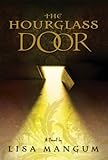
The "back of the book" summary of this sounded interesting but to a degree it felt "done before" as though it was playing off the recent "Twilight" hype and digging into the teenage supernatural romance thing. At the same time, it sounded different enough that I wanted to give it a try. I was pleasantly surprised.
The writing was smooth and easy, accessible to teenagers and younger readers while still being smart, playful and keeping just enough secret to be intriguing while letting enough slip to keep me interested.
Most of the peripheral characters and settings felt moderately bland and fairly stereotypical 'teen romance novel', but there was intriguing depth to some of the characters, particularly Dante, to keep me engaged and wondering where things were going. Abby too was well fleshed out and felt "real" to me. The general high school, home and date scenes were fairly normal but I really liked the juxtaposition of the stage/theatre for the school play and the teenage bar/club ("the Dungeon") for after hours activities. These two settings were unique enough to be interesting and also felt like natural gather points for the story.
The story itself was engaging as well. Abby's immediate draw to Dante seemed a little cheesy at first (although, since all the girls were swooning at him, it worked) and so I liked the mental and emotional debate that Abby had with herself about even thinking about liking him. I liked the deterioration in Abby & Jason's relationship, the growth of Abby & Dante's relationship and the strange development in the other relationships around the school…particularly with the introduction of the band Zero Hour.
More interesting to me was Dante's almost immediate interest in Abby. It seems that this was one of those things that was never fully explained. He had a connection with her from the first moment they meet. Is there something else going on here? Was she the girl from the prologue? Is he connected to her for some other reason? That question was never explicitly answered.
Which brings me to my biggest complaint(s) with the book. There were a lot of intriguing story arcs that existed peripheral to the main story. As such, there were a lot of questions that were exposed…but, to my recollection, many/most of these were never appropriately answered. Did the author know that this would be a series and planned to address these loose threads in a future book? Did she just not have a good answer for them yet but wanted to leave them in to provide some added tension/intrigue? Or are we, the readers, supposed to assume our answers are correct based on the limited knowledge we have?
Some of the questions left unanswered for me (Potential Spoilers): who was the girl Dante saw in the prologue? why did Dante feel an immediate connection to Abby when he met her at rehearsal? why did Dante give Abby the plans for the Hourglass door rather than just planning to rebuild it himself? what was the purposes of the robberies (purportedly done by Zero Hour)? was Veronica affected by "out of time" situations like Abby was? why did Leo forbid Dante to drive (just seemed like a silly rule)? why is Dante such a fast healer (this explanation never worked for me…he's "out of time", ok…but why does this cause his body to heal/regenerate faster)? assuming the answer to Dante's healing has to do with being "out of time", then why has Leo aged/deteriorated so much rather than staying the same (maybe it just slows things down, but then shouldn't healing slow down too)? potential paradox questions…?
Anyway, I really loved the creativity in the use of the door and the way the time portal worked out and the use of the River analogy for time. I enjoyed the relationship between Abby and Dante…particularly the tension between them and the way they dealt with that and grew together naturally.
I am definitely curious to see what happens in the next book (due out this summer). I'm intrigued to see how Dante works things out with Zo and the rest, to find out what Abby and Jason figure out and where things go with her. The Hourglass Door is a fun and intriguing storyline with nice character development and good writing.

4 out of 5 stars
View all my reviews
“A public prosecutor in Milan decided to indict four Google employees... The charges brought against them were criminal defamation and a failure to comply with the Italian privacy code. To be clear, none of the four Googlers charged had anything to do with this video. They did not appear in it, film it, upload it or review it. None of them know the people involved or were even aware of the video's existence until after it was removed. ...A judge in Milan today convicted 3 of the 4 defendants... for failure to comply with the Italian privacy code.”
Google is appealing, but this is still disturbing news.
I realize that many/most people don't actually read the "terms of use", "privacy policy" or "community guidelines" on many/most of the sites that they post to. But having those disclaimers there for users to 'agree' to is supposed to protect the developer from liability.
The alternative is to have individuals screen and approve every single submission that comes through. When you consider that YouTube likely gets hundreds/thousands/more video submissions every hour, the human manageability of this is just crazy. YouTube is very community driven and the YouTube/Google developers have always been very quick to respond (at least as far as I've seen/heard) to infringements of copyright/privacy/etc policy.
Even in this particular case, the claim is that Google employees 'within hours of being notified' removed the video in question and even continued further by helping the Italian police identify the person who uploaded the video in the first place.
Now, I admit that I don't know all the particular details of the case. I suspect that they're being prosecuted on some corner case such as not including Italian-law-specific language in the policy or some such thing. But still, for Google/YouTube to have reacted as swiftly and with such cooperation and then to have been prosecuted and convicted is just amazing.

I went into this book knowing virtually nothing about it. I remembered a vague reference to it from reading Frankenstein last year (the monster discovers and reads this book and relates strongly to Werther) but beyond that, and the general "sorrow" of the central character, I hopped in blind.
The book is written in epistolary style with each letter being sent from Werther to his friend Wilhelm (a couple of the letters seemed addressed to his brother as well?). We never read any responses written to Werther but can sometimes infer the reactions from Wilhelm. Still, the core of the story is told in Werther's letters themselves.
Because of the epistolary style, the narrative is a little 'jumpy' as it skips over time in between letters…sometimes a day or two, sometimes weeks or more. Some of the letters are very lengthy and pour out large segments of plot and action. Others are very short segments of exclamation or emotion. Sometimes even the longer letters don't advance the "plot" so much as provide insight into the thoughts and emotions of Werther.
Through the letters, we follow Werther as he moves to the country and encounters a young girl named Lotte. He is immediately transfixed by her and professes undying love. She coyly allows his advances and it seems as though a romance may appear between them. Quickly we learn that Lotte is betrothed to another man named Albert. Werther is taken aback by this, but still persists in being close to Lotte with the hope of perhaps persuading her to love him. When the time comes, Lotte does marry Albert, much to Werther's dismay, but the three of them remain friendly. Werther visits them frequently and seems to hover incessantly over Lotte. He grows more and more jealous of Albert, which creates some tension in the group and Albert begins to leave the room when Werther comes to visit.
Werther's obsession with Lotte grows more and more intense as time goes on. He battles with himself over the emotions he feels and writes his friend for advice, although it is very clear that Werther does not feel able to (nor does he desire to) make a break from Lotte and strive to love another. He does finally move away from Lotte and spends some time trying to move on with his life. He becomes more and more discontent in his work and more and more obsessed with returning to her.
He finally does move back to live by them again. Albert is more offstandish and put off by Werther's presence. Werther continues to be insistent in his own mind (and sometimes to Lotte or Wilhelm) that there must be a way for her to love him. At the same time, he is emotionally conflicted because he knows she "belongs" to another man and he does not feel it is right to try and take her from him. She eventually tells Werther that he needs to stop coming around so often (he'd been visiting almost daily) but says that he's still a friend and should come by for Christmas as she's made him a gift.
*** SPOILER ***
Shortly after (the day after) Lotte tells Werther to back off a bit, he finds Lotte alone one night and again professes his love and pushes on her and kisses her passionately. She forces him off and tells him how wrong he's behaving. He's again in turmoil but does leave, though he announces (somewhat veiled) that she won't see him again…ever. He returns home and writes a few more notes in preparation of his suicide. He sends a note to Lotte and Albert to borrow their pistols for "a trip he's taking." Lotte realizes what's going on, but sends the pistols anyway. He shoots himself in the middle of the night and dies the next morning. He's buried without clergy, graveyard or cemetery.
*** END SPOILER ***
The presentation of love versus obsession is very interesting here and is very well done. You get a very good sense of the turmoil that Werther's going through…of the pain he's feeling as well as the desire he has but cannot fulfill. After reading the book, I looked up some info on it and found that it is actually fairly autobiographical. Apparently Goethe fell in love with his own Lotte who refused him and married another. He was obsessed for some time and found it hard to work or concentrate. There was a quote I read where Goethe indicates that he actually used Werther (and particularly the ending) to save himself [Goethe].
The story itself is intriguing though not particularly entrancing. It's really the presentation of the mental anguish of Werther that makes this noteworthy to me. Getting into his head and participating in the psychology of obsessive love was really interesting. A lot of his language was actually very romantic and, had it been spent on someone more receptive, could have been very powerful in enhancing a romantic relationship. Parts of the read were a bit slow, but overall, it was a good read.

4.5 out of 5 stars
View all my reviews
Cool video from Jane McGonigal one of the "ten fascinating people you've never heard of" from the TED2010 conference. I might have to try out Evoke...sounds interesting. Kind of "sim city" for the 21st century?
Review - The Drug of the New Millennium - The Brain Science Behind Internet Pornography Use
Posted by Okie in Book Reviews, Books 2010

This book was a very interesting and enlightening read. There are a few minor complaints, but overall I see it as a beneficial book to provide insight into the world of addiction as a whole and of pornography and sexual additions in particular.
The first portion of the book is dedicated to a scientific view of things. It explains in detail the chemical reactions that take place in sexual development and during sexual activities. It explains and explores the physical, mental and emotional changes that occur during "healthy" sexual activity (intercourse in a dedicated, loving relationship) as compared to "unhealthy" sexual activity (pornography, fantasy, lust, rape, etc). Kastleman also compares the physiological and emotional similarities seen when comparing cigarettes/alcohol/drugs/chemical additive behavior/activities with illicit sexual behavior such as viewing pornography. The chemical overload and the resulting "highs" and "lows" follow the same cycle and show stunning correlations between the two and highlight evidence that the viewing of pornography has the same addictive properties as smoking, drinking or doing drugs.
He further explores the differences between the male and female brain. He makes the distinction that females can become addicted to porn and sexual activities as well, but is careful to point out that the path to addiction is generally quite different between women and men due to the differences in their mental structures. I surely won't put it quite as effectively as he did, but from a high level the differences are largely that men are focused on the physicality while women are focused on the emotional. With that in mind, it may not seem logical that women can be addicted to porn since it is so focused on the physical and lacking the emotional…but that is based largely on the world view of porn which is based on the male model…Kastleman explains the different types of porn available (not explicitly or graphically, mind you) and points out how the porn industry has created porn for physically-minded men as well as porn for emotionally-minded women.
As part of the exploration of the notable physiological behaviors, Kastleman describes what he calls the "funnel" effect of 'sex' (meaning healthy or unhealthy sexual intercourse, lust, fantasy, pornography interaction, etc).
In describing a healthy sexual relationship, he showed how the preamble to sex is more than just "foreplay" but actually encompasses the relationship itself…the romantic interludes, the kind words, fun dates, courtship, etc. It then progresses to sexual intercourse which is the culmination of the courtship/romantic practice by bringing two people in love as close as they can become and allowing for a wonderful shared experience. Following the healthy sexual relationship beyond the sexual act, he points out that for a healthy sexual relationship, they come out of the sexual experience fulfilled and brought closer together and thus happier and more in love.
In contrast, viewing pornography (or other illicit sexual activities) remove the relationship aspect and narrow the "funnel" immensely, focussing solely on the act itself. The same chemical experiences occur, but without the appropriate emotional buildup or preparation. Furthermore, after the act itself is complete, the participant is left without any emotional (or even physical or mental) support and dropped from the "high" into a free fall out of the "funnel." In addition, the participant (depending on his/her moral background and other relationships) often feels guilt or shame at the act. Add to this the fact that his/her brain gets desensitized to the pornography and thus needs more and more extreme forms for the same "high" and the shame factor often increases as time goes on because the behavior/practice becomes more illicit/taboo/etc.
The result is a sort of emotional downward spiral. Add to this the general stigma put on 'unhealthy' sexual behavior, and the porn addict often finds him/herself floundering and alone. The guilt/shame factor leads the individual to become isolated or secretive, hiding the practice and unwilling to even seek help because of the taboo surrounding the behavior. In contrast, society as a whole presents tons of opportunity for sexual fantasy and sets a double standard…on the one hand promoting promiscuity and pornography as normal and acceptable…and on the other hand, presenting sexual addicts as heinously dirty and undesirable individuals. This polarity in opinion creates a divide in the mind of the addict and makes it even more difficult to find a path. The book spends some time explaining the nature of the porn industry and the way the Internet has made it even more accessible. It also explains the way society as a whole is growing more and more desensitized to the presentation of pornography (just look at all the near-soft-core porn on prime time network TV…to say nothing of cable TV).
*****
In the last portion of the book, Kastleman presents his 'power principles' for escaping and/or preventing sexual addiction.
(I don't have the book in front of me right now, so hopefully I remember these correctly).
First, his focus is on adequately and accurately teaching the truth about sexual intimacy. He discusses the paradox we create when we teach kids that sex is 'dirty' or 'forbidden' and that they should avoid it…while at the same time telling them that it's a special experience they should 'save themselves' for their spouse. Sometimes kids only get ONE of these messages…if all they get is the "save yourself" message, then there's no real explanation as to what sex is about or why it's important to wait and be pure. If all they get is the "taboo" message, then when they feel the sexual stirrings of puberty, they suddenly feel like they are dirty, evil people. Kastleman focuses, from a religious perspective, that sexual intercourse is a great gift from our Creator to help us become "one" as husband and wife and to participate in the "creation" process ourselves.
In this section, I really liked his analogy…that LIFE is so sacred that we have huge consequences for someone who irresponsibly TAKES a life…but we are flippant about someone who irresponsibly GIVES life.
The second principle focused on is one of creating "true" intimacy in relationships…to help understand the difference in the emotional 'funnels' of healthy sexual behavior and unhealthy sexual behavior and to chose the former. He emphasizes that each of us as humans need and desire love and affection. A healthy, romantic, intimate relationship provides healthy, lasting and fulfilling state of love and affection. Conversely, an unhealthy, lustful 'relationship' with pornography simply provides fleeting "highs" and devastating "lows" that result in loneliness and isolation.
Finally, he proposes that we prepare ourselves. Society is a mess. Pornography and sexual complacency are more and more prevalent in the world. We need to recognize the dangers and properly fortify ourselves and our families. We need to be able to recognize in ourselves (and others) the "triggers" that can lead to unhealthy sexual desires so that we can avoid them and climb out of the hole before falling too deep. We also need to be aware of warning signs that someone is struggling with the shame cycle that comes with addiction and be prepared to help them in a positive way. We should also make appropriate physical safeguards in our home and environment (keep the computer in a high-traffic area, install Internet filters to protect web surfers, avoid situations prone to sexual presentation, etc.).
******
As I mentioned at the beginning, I found this book very informative and worth reading.
I did have (and have heard from others) a few minor complaints. My biggest personal complaint is that of an English major and frequent reader. This book desperately needs another pass or two by a copy editor. The grammatical errors weren't huge, but they were frequent enough that it was a distraction to me. Considering the amount of time required to gather and properly annotate the many research articles/books/etc that he cites, it wouldn't have been out of line to take a little extra time for an additional pass to check grammar/etc.
I saw online a couple of people complaining about Kastleman's religious comments. While he does not promote any particular religion in this book, he most certainly has a belief in God and has a definite moral compass that he follows. Probably the most specifically religious segment of the book has to do with his discussion of sexual intimacy as a sacred gift given us from God and intended as a kind of parallel with His act of creation. Since everyone has different beliefs, this concept in itself could be controversial. To those who are non-religious or atheistic, any concept of a Creator or a God is against what they want to believe. At the same time, I look to the "12 step" program created by Alcoholics Anonymous and adopted by many other addiction programs…their program doesn't preach any particular religion, but it definitely has aspects that looks to the divine and believes in a Creator or a God who is out there to help work through things. I'm not here to condemn anyone for not believing in God, but I think that using Kastleman's religious remarks as an excuse to dismiss what he presents is a pretty weak excuse.
The one other complaint that I heard from someone is that this book could actually act as a "trigger" to get someone into porn addiction. I've seen similar arguments made about books that talk about drugs, eating disorders, serial killers, etc. I do put some stock into the fact that some people are just SO prone to a particular kind of behavior that they could be unduly influenced by the presentation of data. However, I feel that this book was presented appropriately and clearly so as to provide factual data without inappropriately being alluring or glamorizing the porn industry. It most definitely did not condone indulgence in porn. What it did do was explain, from a high level without specific details, some of the general methods the porn industry tries to entice men, women and teens into the world of pornography. I don't personally see those descriptions as being potential "triggers" but I suppose some overly ambitious/curious reader may seek to "test out" the claims that innocuous paths can quickly become enticing traps laid by the porn industry.
***
So, overall, I felt that this book provided an intriguing and educational view of addiction from a scientific point of view…of the emotional, physical and mental changes that happen due to pornography…and provides good advice to help avoid or escape pornographic addiction. As a man in my mid-30s with my own sexual desires, I found a lot of value in the scientific exploration and in the advice given. Moreover, as a parent of 3 young children (my oldest being a 10-year old boy), I have been considering lately how to best protect my kids from the sexual wiles of an increasingly dangerous world. While this book doesn't provide all the answers, it at least gives me some ideas and paths to follow.
It's a pretty quick read and I can see this as being beneficial to almost anybody living in our increasingly sexual world.

4 out of 5 stars
View all my reviews
One of my biggest worries going in was that it might be too intense for Julia and maybe for Andrew. Julia's biggest complaint was that it was too loud at times (although she did legitimately hide from the visuals at least twice). Andrew agreed that it was loud but didn't have any other complaints. And they both slept through the night fine afterwards. There were a handful of sequences that were overly scary for young kids…many of which were in the trailer (hence my original nervousness). The transformation of Mrs. Dodds into a Fury, the Minotaur, Hades at the camp, the Hydra and a few segments in Hades' palace. Of those, it was the Hydra and the Hellhounds that got to Julia. She quickly recovered though and enjoyed the rest of the film.
I was taken aback by some of the cheesy dialog and presentation. Riordan's writing may be for kids or tweens, but it was still witty, tight and smart. I definitely didn't get that same vibe from the writing in the film. Some of the acting was a bit staid as well (I though Uma Thurman made a good Medusa but her performance felt 'phoned in'…and Pierce Brosnan didn't sell his role to me either). But for a kids adventure movie, the script and the acting worked. The special effects were fabulous (though the satyr and centaur effects didn't look quite 'right' to me). The pacing and action was good. Overall, it was a great adventure movie.
As for the overall reactions to the film…as I said, we all enjoyed it. Jason and I talked a bit about some of our disappointments having read the books. And honestly, it's those differences that seem to be our main complaints.
Not all of the differences bothered me, but while watching the film, the following complaints nagged at me:
- No explanation of why the gods and mythological locations are in America rather than Greece
- What's up with Grover becoming a semi-sex-crazed comic relief character?
- The action at the camp was way TOO SHORT (I didn't feel any real time lapse….it felt like he was awake at the camp for maybe two days….which suggests that ALL of his skill is from instinct rather than training)
- The sexual innuendos and flirtations from the Nymphs and daughters of Aphrodite
- With the camp….so many key elements were removed:
- No 'sorting' (maybe they didn't want it to be too much like Harry Potter's sorting?) into tents
- No Clarisse, Dionysus or other camp characters
- No mention of Thalia or her tree or the barrier around the camp
- No oracle or prophecy or official quest…rather, Percy & co just sneak out of camp with no clear idea of what they're doing
- No meeting with Ares on the quest
- No "waiting room" before entering Hades
- The Underworld is all 'hell fire and brimstone' rather than actually presenting the different degrees of the Underworld as in the book (and mythology)
- No frantic escape while being pulled into Tartarus
- No Cerberus
- No Helm of Darkness
- Percy's amazing control over the powers of water
In spite of the complaints, I really did enjoy this movie. It was a lot of fun and a good adventure. It was generally appropriate for kids, even fairly young kids (Julia is 5 and was very borderline). Language and violence weren't over the top and the innuendo was generally brief and (likely) over the head of young kids. As a family film, it does well (should satisfy the same sort of audience as for the early Harry Potter films).
I look forward to seeing how well they work through the rest of the series (especially considering the fact that they removed a few key building blocks through their omissions). I suspect the movie will be well received and it will be a popular series. I won't mind if future films stray from the books to a degree, so long as they provide a bit more accuracy in terms of the mythological aspect and as long as the bits they remove from the books are truly peripheral (pulling out elements that can make a plot stronger just seems silly to me).
If you haven't read the book, you should have fun. If you have read the book, try not to be too critical of the differences. Young kids or easily frightened kids should wait a bit or have parents there to cover their eyes/ears. Overall, it's a fun experience. The story and characters are very creative and a lot of fun. If you had to choose between the book and the movie, take the book…but you needn't avoid the movie.
3 out of 5 stars
Check out all the fun my fam and I "virtually" had on our own magical Disney vacation. :)

I'm starring in my very own magical Disney Vacation video, check it out!
Happy Valentine's Day lovey dovey! We've shared 14 wonderful V-days together so far...I'm looking forward to many, many more! :)
Dystopia is one of my favorite genres, both in books and movies. So I thought this quiz would be fun. My results are below.
How did you do?
You are seen as a threat to unity and conformity. Make sure you keep your thoughts inside, otherwise you might die.
What are your chances of survival in a Dystopia?
Take More Quizzes
Looking at this latest trailer, it seems like there are some definite liberties taken that I don't remember from the book as well as at least one possible element from the second book that showed up early? Still...it looks pretty good and I'm hopeful that it's a good adaptation.
Anybody seen it yet?

I'd waited excitedly for the conclusion to this trilogy in the "real" Wonderland. The concept of a "real" wonderland beyond the cartoony nonsense/caricature world was certainly intriguing to me and I had a lot of fun with the world Beddor had already created. I really enjoyed the first novel in the series. The second one fell a little flat for me but was still enjoyable and left us hanging onto a cliff waiting for the exciting conclusion to the events that were set up.
Some of my complaints with the earlier two books are still present. The writing really isn't anything "to write home about." Much of the dialog is trite and the onomatopoeia that accompanies many of the action/battle sequences can be a little distracting. The characters are alright, but many of them feel a little flat most of the time.
Accepting the fact that this is a book written for young(er) boys, I was able to forgive the "literary merit" of the Looking Glass Wars series (being sure to point out that this isn't a book for Wonderland purists or for classical literary enthusiasts/purists). I also acknowledge that Beddor is a moviemaker and these novels definitely feel poised to be presented cinematically.
My biggest complaint with this novel specifically was the use of "foreshadowing." There are two particular instances that absolutely distressed me.
The first instance happens on the first page….the novel "begins" with a scene in which Queen Alyss is fighting with an assassin to save some friends and then tries to make her escape from danger. There is a "date" associated with the event and if you look at the date, you'll notice that it's in the future as compared with the rest of the novel. It's possible that Beddor is playing with this a bit to make this be an "alternate future" seen by the Oracles or something…but he doesn't explain any of that. Instead, he just presents this VERY CRITICAL scene and lets it sit there. Unfortunately, this scene is a HUGE plot point that I feel would have been better presented as a big surprise in the normal course of events. The implications of this scene are enormous. However, I have 200+ pages to contemplate their enormity before the scene 'actually' happens (almost verbatim, I think). As a result, when the scene actually happens, it has lost almost all of its impact and I'm not surprised nor does it feel like any sort of climax. Furthermore, it makes "secret" motives from King Arch a lot less secret. I know a lot of authors like to include a sort of Prologue to stores…and it's alright to have a Prologue act as a foreshadowing…but come on, don't make it an exact presentation of a highly critical and exciting scene that happens at or near the climax of the book. Talk about destroying your story arc!
The second instance of failed foreshadowing was a little less disturbing/dramatic, but was still a little troubling. Early on, we have a scene where one of the Caterpillars appears to Molly and gives her a vision. While I can try to infer the exact importance of that vision and what the Caterpillar was trying to do, I cannot come to any definitive or acceptable conclusion. I can see where "maybe" this 'prophecy' puts some events into motion (maybe…) but even then, the actions that Hatter/Molly take seem peripheral to this prophecy rather than directly impacted by it. At the very end of the novel, Molly does have a critical role to play, but it still seems a bit of a stretch even for the hugely enigmatic message from the Oracle. If this prophecy was truly important, the author should have made its importance more apparent.
All of that aside, I did enjoy the way this third novel wrapped up the series.
I enjoyed the growth in Alyss' character as she acknowledged the responsibilities of being queen and champion of White Imagination and as she then rose to the occasion to try and exemplify that role while at the same time being a compassionate and loving friend. Dodge's character took on similar growth, albeit to a less dramatic extent. Hatter and Molly seemed to expand as well, though their character's evolutions were largely minimized which made me a little sad. Most of the other characters were slightly fleshed out stereotypes which, while interesting (especially the dynamic between Arch and Rose) were not terribly compelling.
The strangest characters, which figured prominently in the book, were the Caterpillars. Because of their prominent involvement in the plot, I can't say much…but I think I would have liked to have seen (even though I really didn't like their dialog style) more scenes focussed on the Caterpillars.
The story arc was enjoyable and the tumult of activity within Wonderland was exciting to follow. I was very curious about the "Anti-Imaginationists" and would have enjoyed more details about them, even though they were largely puppets in Arch's plan. Rose's army was still very creepy and I love some of the details there. The ebb and flow of Imagination's power from the Heart Crystal felt underplayed and/or under-explained, but it did provide nice tension to the fluctuating balance.
The climactic flow and the final wrap up felt rather weak and somewhat contrived (the weakness largely due to the failed foreshadowing I mentioned above as well as lack of development in some key points such as the Imaginationist prison camps or the tension between Rose's assassins and those they were forced to work with). The creation of "Everqueen" (which was considered as an alternate title to the book) left me somewhat confused and slightly dissatisfied. Everqueen had been alluded to briefly a couple of times and when Everqueen was finally presented, there was not sufficient elaboration on the importance/significance. Again, since this came from the Caterpillars, it's fitting with their character, but I would have loved to have perhaps seen Bibwit expound on the virtues of Everqueen or something.
Looking back on this (lengthier than I anticipated) review, I have a lot of complaints. Perhaps I'm being too critical…because I really did enjoy this story. I think I was just hoping for more out of the book. It's an entertaining book and a fun and intriguing story in a cool world with cool characters…but it is also definitely a "fluff" book whereas I saw potential for deeper, more thought provoking themes.
Overall, recommended for adventure seekers who are looking for some light reading. You probably shouldn't jump right into Book 3…you may be able to start in Book 2, but I personally liked Book 1 the best, so I'd suggest just reading the series as it's presented.

3 out of 5 stars
View all my reviews
I know the Internet attention span is usually 20-30 seconds...but you should really try to watch this whole video. It's cool new technology that really does some amazing things. If you must skip ahead, you can probably bounce to the ~5 minute mark (you'll miss a lot of the background and preliminary research) and just start watching some of the cool things he's doing.

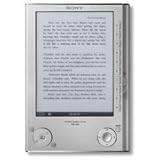
OK...there have been a lot of posts going around about eReaders and eBooks and the whole price structure and the concept of which eReader is best for the user, for the publisher, for the distributor, etc.
There has been a lot of blame throwing regarding gouging the customers on the eReader or fleecing them on the cost of the eBook.

Especially now that Apple has entered the mix and it looks like "normal" eBook prices will increase by at least a few dollars (from the ~$10 that Amazon has going on), there is a lot of concern about those greedy people at Apple, Amazon, Macmillan, HarperCollins, Penguin or whoever.
I definitely don't claim to know what's really going on, nor do I have all the answers, but here's the way I see it.
The "behind the scenes" reasons that publishers are scared and running to Apple is this...
"So far" they (publishers) are not losing money on eBooks. In fact, publishers are coming off golden on eBook sales because (in most cases) they charge distributors (Amazon, BN, etc) the SAME WHOLESALE PRICE for the eBook as for the hardcover.
So, taking the latest Dan Brown spectacle, The Lost Symbol, as an example....
The publisher sent out physical hard cover copies and ebook license/copies to distributors. In both cases, they got the same price for the book. So Amazon maybe paid $12 for each hardcover copy and $12 for each ebook.
The result? Publishers are making HUGE profits on eBooks...right now.
The risk is this...you notice that Amazon then takes that ebook (that they just paid $12 for) and turns around and sells it for $9.99....at A LOSS. Sure, that's great business up front as it drives the sales of their own reader and ties people to Kindle. There are other ebooks that they certainly get cheaper and will (hopefully) recoup their losses on in the long run.
However, the publishers are frightened that Amazon (and barnes & noble and sony as well) will continue to sell their books at a loss...drive up huge customer demand and expectations (why would a customer want to pay more than $10 for an ebook)...and thus demand publishers to lower the wholesale cost of the ebook so that distributors can make a profit.
Apple is being very strategic in seeing the fears of the publishing industry and playing to those fears. If they can allow publishers to set the price of the ebook, then the publishers come off as the bad guy for higher prices...not Apple (which makes Apple happy). And Apple's bet is that more publishers will do exclusive deals with them (Apple) because they can make the higher margins on sales (assuming the books sells as well). While I'm not a huge fan of Apple condoning the fleecing by the publishers, I can't blame them for a strategic move that could pay off big for them.
The real problem in the model is the same problem that we've dealt with since ebooks came around....the wholesale pricing model. Publishers weren't sure how to handle ebooks. They wanted to release them the same time as the hardbacks, especially since hardback sales were down and e-readers were getting better. At the same time, they need that huge influx of revenue with the launch of a book.
So, they stayed greedy. Even though the cost of goods is relatively small on an e-book (once the hard book is created, it's a smaller step to jump to digital...granted, there is some investment in tech development and making sure it works right and is laid out right...but once that's done, there's no overhead to send out copies). So the real argument is how publishers can honestly justify charging distributors the same price for their ebooks?
I haven't followed any big discussions with authors on this topic, but from what I've seen, this doesn't (yet) affect authors much...though I'm sure if publishers have to charge less for ebooks that they'll gladly pass that revenue drop right over to the authors.
For now, the authors' big concerns about e-books largely have to do with the piracy issue, which is a valid concern. The ebook piracy thing especially bothers me since there is already a FREE venue to get almost any book you want...the LIBRARY! True, some communities have poorly stocked libraries, and checking a book out from a library doesn't give you the digital format...and you don't get to keep it forever. But COME ON....do you really need to steal a book you can check out for free from the library? If you really want to read it without paying, hit the library...if you want to keep it forever, buy it. Honestly, if there's a book I love and want to keep forever, I'd much rather have the hardcover version than the e-book.
Wow, what a rambling post. Sorry. :)
So which eReader is hear to stay? I personally don't care. I may eventually get one if the price point becomes right (for the reader) and the market stabalises (I'm not eager to see books go down the path that music did - vinyl, 8 track, cassette, CD, etc. - or that movies did - laserdisc, beta, vhs, dvd, hd-dvd, blu-ray, etc.). But I can see the convenience in having a library at my fingertips for vacations, sitting at the mechanic/doctor/etc or other times. Generally though, I am certain I will always prefer the physical book format that I've grown up with.
I still shell out hundreds of dollars a year, often for hardbacks from favorite authors...sometimes buying up paperbacks from an entire series I've fallen in love with. I'm a bit worried about the book industry and concerned that they could shoot themselves in the foot through this ebook battle. I'm sure books as a whole will survive...people will continue to clamor for great stories and writers will continue to write (for many it's a compulsion that can't be stopped *grin*)
I just hope that whatever the future brings to books, that I can still afford to relax with a good book.

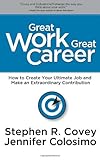
I know many people who are out of work or are dissatisfied with their current jobs. I myself am not actively job hunting nor am I particularly dissatisfied with my job. However, this book can be read, enjoyed and applied by anyone who has an earnest desire to find that "great career" or to create a "great career" at his or her current job. For those job seekers, the end of the book does include some suggestions on crafting a resume, cover letter or even on giving presentations to prospective or current employers outlining your plans for success.
If you have read 'The 7 Habits of Highly Successful People', you'll notice a lot of familiar language.
In discussing the nature of our current economic times, the book talks about such concepts as the "Abundance vs Scarcity Mentality", "Circle of Influence vs Circule of Concern", "Emotional Bank Accounts" and changing our Paradigm to look at the workplace through the lens of the Knowledge Worker age rather than the Industrial Age. The book talks about (though I don't think it ever used the '7 habits' terms) "production vs production capability."
And it spends a considerable amount of time talking about problem solving, identifying needs, turning needs into opportunities and creating your own personal Contribution Statement based on your own strengths, talents, passions and your moral compass or conscience.
The book gives advice for taking that Contribution Statement and actually conducting a "Need-Opportunity" presentation rather than going to job interviews. It presents ideas and methods for helping yourself stand out from the crowd to a prospective employer or even to your current boss. There are suggestions for expanding your "Circle of Influence" to better meet your talents and passions.
The authors also go into some depth about "Building Your Village"…a 21st century mindset around networking and working through people you know to achieve your goals. The book talks about creating a village through your friends and co-workers but also about about the importance of carving a space out for yourself on the Internet…diving into social networking such as LinkedIn or even Facebook….creating your own webspace by writing a blog about your passion/expertise…maybe even writing an e-book. The authors emphasize that your village should be based on "real" relationships rather than just a bunch of names who can "do something for you"…focus on building that Emotional Bank Account and then use your village to synergistically achieve your goals.
Like many books in this vein, there's not a lot here that felt "revolutionary"…on the contrary, it all felt like "common sense" and a lot of it feels like those "aha" moments where you smile, nod and wonder "why didn't I think of this earlier". The writing style is simple and easy to understand. There are a bunch of inspirational stories and examples and there is plenty of great advice.
So whether you're on the hunt for a job, trying to improve your current position, or self-employed and looking to solidify your own contribution, this book should have something to help you develop, focus on and come up with a plan to achieve your long-term career goals.

4 out of 5 stars
View all my reviews
About Me
- Okie
- Husband, Father of 3, Reader, Writer, Student, Employee in Corporate America.
Books Read in 2011
- The Star Shard
- The Shakespeare Thefts
- Peter and the Starcatchers
- The Maltese Falcon
- Flygirl
- Batman: The Killing Joke
- Jacob T. Marley
- Doc: A Novel
- The Man in the Iron Mask
- The Throne of Fire
- The Death Cure
- The Good Earth
- Rise of the Darklings
- The Ruins of Gorlan
- Stranger in a Strange Land
- The Orphan of Awkward Falls
- The Invention of Hugo Cabret
- A Room With A View
- The Gypsy Morph
- Casino Royale
- The Red Pyramid
- Kingdom Keepers: Disney After Dark
- Oliver Twist
- The Lost Hero
- The Mysterious Affair at Styles
- Tuck Everlasting
- The Scorch Trials
- Crucial Conversations
- The Tale of Desperaux
- The Name of the Rose
- Matched
- The Elves of Cintra
- The Learning eXPLOSION
- A Lion Among Men
Books Read in 2010
- The Graveyard Book
- The Last Olympian
- The War of the Worlds
- The Maze Runner
- The Lord of the Flies
- The Dain Curse
- Fablehaven
- The Turn of the Screw
- Dracula
- A Charmed Life: Growing Up in Macbeth's Castle
- The Last Apprentice: Revenge of the Witch
- Foucault's Pendulum
- Chains
- The Battle of the Labyrinth
- The Search for Delicious
- The Holy Man
- Mockingjay
- The Voyage of the Dawn Treader
- Those Extraordinary Twins
- The Tragedy of Pudd'nhead Wilson
- Beyond the Grave
- To Kill a Mockingbird
- The Sword Thief
- The Amulet of Samarkand
- The Great Divorce
- The Titan's Curse
- The Black Unicorn
- One False Note
- Magic Kingdom for Sale | Sold
- The Four Loves
- Catching Fire
- A Monstrous Regiment of Women
- Soulless
- Pride and Prejudice and Zombies
- Right Ho Jeeves
- The Maze of Bones
- A Tale of Two Cities
- The Hourglass Door
- The Sorrows of Young Werther
- The Drug of the New Millennium
- Archenemy
- Great Work Great Career
- Sea of Monsters
- The Hunger Games
Books Read in '09
- Beloved
- Holes
- The Tales of Beedle the Bard
- Jesus Without Religion
- The Water Babies
- Coraline
- Erewhon
- Tess of the d'Urbervilles
- The Elusive Pimpernel
- The Island of Doctor Moreau
- The People of Sparks
- Heart of Darkness
- Watchmen
- Tarzan of the Apes
- The Lightning Thief
- Angels & Demons
- Rapunzel's Revenge
- Son of a Witch
- Prince of Persia
- Austenland
- BUtterfield 8
- Chickens in the Headlights
- Bullies in the Headlights
- The Beekeeper's Apprentice
- Pillage
- The Mysterious Benedict Society
- Babbitt
- Frankenstein
- Red Harvest
- The Public and Its Problems
- Fables: Volume 1
- The Great Gatsby
- Captain Blood
- Coming of Age in Samoa
- Mysterious Benedict Society and the Perilous Journey
- The Sun Also Rises
- Fantastic Mr Fox
- Gentlemen Prefer Blondes
- But Gentlemen Marry Brunettes
- The 7 Habits of Happy Kids
- The Big Money
- The Scopes Trial
- The Charlemagne Pursuit